
AIMP2 (aminoacyl tRNA synthetase complex interacting multifunctional protein 2)

symbol
AIMP2
locus group
protein-coding gene
location
7p22.1
gene_family
-
alias symbol
p38|PRO0992|JTV-1|JTV1
alias name
multisynthetase complex auxiliary …
entrez id
7965
ensembl gene id
ENSG00000106305
ucsc gene id
uc003spo.4
refseq accession
NM_006303
hgnc_id
HGNC:20609
approved reserved
2009-05-20
7p22.1
ChineseEnglish

AIMP2, also known as JTV-1 or SCYE1, is a multifunctional protein belonging to the aminoacyl-tRNA synthetase-interacting multifunctional protein (AIM) family, a group of cytosolic proteins that physically associate with aminoacyl-tRNA synthetases (ARSs) to form large multi-enzyme complexes essential for the accurate and efficient charging of tRNAs during protein synthesis. Beyond its canonical role in ensuring translational fidelity, AIMP2 functions as a critical regulator of cell survival and death, exerting potent tumor suppressive activities by modulating key signaling pathways such as the activation of p53-mediated apoptosis and the inhibition of the pro-survival NF-κB pathway. This dual functionality allows AIMP2 to act as a checkpoint in cellular homeostasis; its overexpression typically inhibits tumor cell proliferation and promotes apoptosis, whereas its downregulation or loss-of-function mutations are frequently observed in various malignancies, including lung cancer, breast cancer, and glioblastoma, where they contribute to increased translational errors, impaired apoptotic responses, and enhanced tumor progression. Furthermore, AIMP2 is implicated in broader physiological processes, including the regulation of inflammatory responses and fibrotic pathways, suggesting that its dysregulation may underlie the pathogenesis of certain inflammatory and fibrotic diseases. As a central node connecting protein synthesis quality control with cell fate determination, AIMP2 serves as a vital molecular switch whose functional integrity is crucial for maintaining cellular stability and preventing the development of diverse pathological conditions.
Nucleotide sequence of AIMP2:[NCBI]
Loading Gene Browser...
Protein Sequence
1MPMYQVKPYH GGGAPLRVEL PTCMYRLPNV HGRSYGPAPG
41AGHVQEESNL SLQALESRQD DILKRLYELK AAVDGLSKMI
81 QTPDADLDV TNIIQADEPT TLTTNALDLN SVLGKDYGAL
121KDIVINANPA SPPLSLLVLH RLLCEHFRVL STVHTHSSVK
161S VPENLLKC FGEQNKKQPR QDYQLGFTLI WKNVPKTQMK
201FSIQTMCPIE GEGNIARFLF SLFGQKHNAV NATLIDSWVD
241IA IFQLKEG SSKEKAAVFR SMNSALGKSP WLAGNELTVA
281DVVLWSVLQQ IGGCSVTVPA NVQRWMRSCE NLAPFNTALK
321LLK
Structure predicted by AlphaFold DB(UniProt: Q13155). Color indicates pLDDT confidence (dark blue = high, yellow/orange = low).
SNP variants of AIMP2:           Showing partial SNPs
rs4560       rs12657       rs1062372       rs1133132       rs1860459       rs1860460       rs1860461       rs1986625       rs2009115       rs2079819       rs2302335       rs2302336       rs2345055       rs3735295       rs3735296       rs3757480       rs3779106      

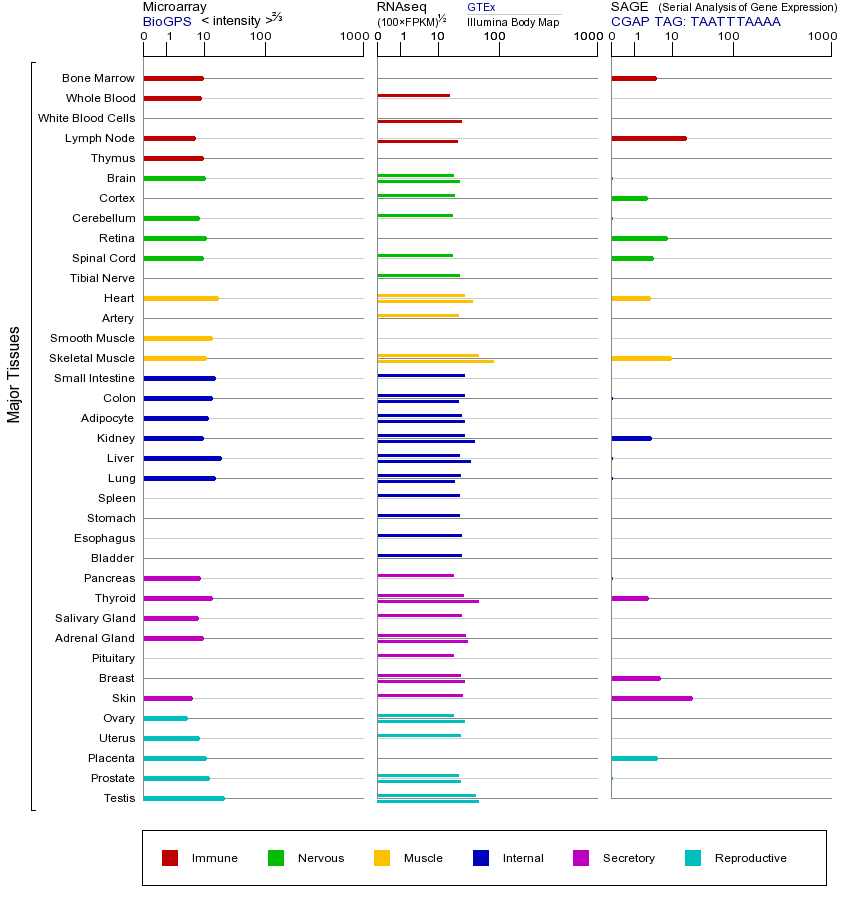
Tissue expression of AIMP2:    [UniProt]

Gene expression across tissues
Forward Primer
Forward Tm
Reverse Primer
Reverse Tm
Score
GTGCTTGGGAAGGATTACG
59
TCCAAAGCACTTGAGAAGGT
60
TGGTGGTTTAGGAACTCCT
58
AGACAGGTTAGACTCTTCCTC
58
GAAGAATGTGCCGAAGACG
59
AGAAACGTGCAATGTTCCC
59
GAAGAATGTGCCGAAGACG
59
AGAAACGTGCAATGTTCCC
59
AGGTAAAGCCCTATCACGG
59
TTAGACTCTTCCTGCACGTG
60
GGAAGAATGTGCCGAAGAC
59
GAAACGTGCAATGTTCCCT
59
GGAAGAATGTGCCGAAGAC
59
GAAACGTGCAATGTTCCCT
59
TGGTGGTTTAGGAACTCCTC
59
AGACAGGTTAGACTCTTCCTC
58
AGGTAAAGCCCTATCACGG
59
TTAGACTCTTCCTGCACGT
58
GTGCTTGGGAAGGATTACG
59
CCAAAGCACTTGAGAAGGT
58

Subcellular localization of AIMP2 (and its protein):

[UniProt]     [GenomeNet]

" d="M482.414,245.296c3.539,4.293,4.455,10.009,0.202,11 c-4.244,0.996-4.983-10.983-8.293-8.438c-5.271,4.08,9.834,12.271,5.144,17.287c-3.717,3.607-6.172-5.75-10.839-1.976 c-4.673,3.776,6.781,7.299,2.831,11.326c-4.354,4.045-6.979-1.449-9.837-5.517c-1.193-1.742-2.059-3.851-3.595-2.748 c-1.516,1.078-1.854,1.795-0.938,3.666c2.374,4.854,9.235,10.119,5.156,12.535c-5.636,3.346-5.044-8.871-9.426-7.574 c-4.388,1.291,2.557,10.66-1.245,11.141c-4.089,0.545-3.483-10.239-6.979-8.575c-2.522,1.206-0.929,3.071-0.938,4.899 c0.004,1.32-0.964,3.6-2.372,4.062c-3.593,1.171-8.544-1.065-10.251-3.59c-6.04-8.93,0.396-15.997,4.639-7.015 c3.023,4.642,5.182,0.834,2.839-2.219c-1.032-1.354-4.309-5.901-0.781-7.252c2.904-1.113,4.271,1.941,5.985,4.592 c2.61,4.016,5.485,0.117,3.031-3.414c-1.828-2.633-2.74-3.803,3.156-7.42c6.405-4.369,6.52,3.869,10.077,0.646 c2.309-1.832-4.783-5.149,0.06-8.995c2.896-2.293,5.18,6.207,7.961,3.516c3.523-2.737-7.717-7.369,0.117-11.736 C473.413,240.77,480.519,242.891,482.414,245.296z"/> Extracellular space Cytosol Plasma membrane Cytoskeleton Lysosome Endosome Peroxisome ER Golgi Apparatus Nucleus Mitochondrion 0 1 2 3 4 5 Confidence
  • plasma membrane
  • cytoplasm
  • extracellular
  • golgi
  • vesicle
  • cytoskeleton
  • endoplasmic reticulum
  • nucleus
  • endosome
  • lysosome
  • mitochondrion

Gene Ontology (GO) terms for AIMP2:

GO ID
Protein
Source DB
GO:0005515
Q13155 (UniProtKB)
IPI
GO:0005515
Q13155 (UniProtKB)
IPI
GO:0005515
Q13155 (UniProtKB)
IPI
GO:0005515
Q13155 (UniProtKB)
IPI
GO:0005515
Q13155 (UniProtKB)
IPI
GO:0005515
Q13155 (UniProtKB)
IPI
GO:0005515
Q13155 (UniProtKB)
IPI
GO:0005515
Q13155 (UniProtKB)
IPI
GO:0005515
Q13155 (UniProtKB)
IPI
GO:0005515
Q13155 (UniProtKB)
IPI
GO:0005515
Q13155 (UniProtKB)
IPI
GO:0005515
Q13155 (UniProtKB)
IPI
GO:0005515
Q13155 (UniProtKB)
IPI
GO:0005515
Q13155 (UniProtKB)
IPI
GO:0005515
Q13155 (UniProtKB)
IPI
GO:0005515
Q13155 (UniProtKB)
IPI
GO:0005515
Q13155 (UniProtKB)
IPI
GO:0005515
Q13155 (UniProtKB)
IPI
GO:0005515
Q13155 (UniProtKB)
IPI
GO:0005515
Q13155 (UniProtKB)
IPI
GO:0005515
Q13155 (UniProtKB)
IPI
GO:0005515
Q13155 (UniProtKB)
IPI
GO:0005515
Q13155 (UniProtKB)
IPI
GO:0005515
Q13155 (UniProtKB)
IPI
GO:0005515
Q13155 (UniProtKB)
IPI
GO:0005515
Q13155 (UniProtKB)
IPI
GO:0005515
Q13155 (UniProtKB)
IPI
GO:0005515
Q13155 (UniProtKB)
IPI
GO:0005515
Q13155 (UniProtKB)
IPI
GO:0005515
Q13155 (UniProtKB)
IPI
GO:0005515
Q13155 (UniProtKB)
IPI
GO:0005515
Q13155 (UniProtKB)
IPI
GO:0005515
Q13155 (UniProtKB)
IPI
GO:0005515
Q13155 (UniProtKB)
IPI
GO:0005515
Q13155 (UniProtKB)
IPI
GO:0005515
Q13155 (UniProtKB)
IPI
GO:0005515
Q13155 (UniProtKB)
IPI
GO:0005634
Q13155 (UniProtKB)
IEA
GO:0005829
Q13155 (UniProtKB)
TAS
GO:0005829
Q13155 (UniProtKB)
TAS
GO:0005829
Q13155 (UniProtKB)
TAS
GO:0005829
Q13155 (UniProtKB)
TAS
GO:0005829
Q13155 (UniProtKB)
TAS
GO:0005829
Q13155 (UniProtKB)
TAS
GO:0005829
Q13155 (UniProtKB)
TAS
GO:0005829
Q13155 (UniProtKB)
TAS
GO:0005829
Q13155 (UniProtKB)
TAS
GO:0006418
Q13155 (UniProtKB)
TAS
GO:0006915
Q13155 (UniProtKB)
IEA
GO:0008285
Q13155 (UniProtKB)
IEA
GO:0016020
Q13155 (UniProtKB)
IDA
GO:0031398
Q13155 (UniProtKB)
IEA
GO:0060510
Q13155 (UniProtKB)
IEA
GO:1901216
Q13155 (UniProtKB)
IEA

microRNAs potentially regulating AIMP2:     

String
BioGrid
IntAct
mentha
MINT
Reactome
Loading…
Interacting Gene Interaction Source/Score
Disease Score NofPmids NofSnps Source
Breast Carcinoma 0.007057489 26 0 BeFree
Malignant neoplasm of breast 0.006786047 25 0 BeFree
Malignant neoplasm of lung 0.00643866 16 0 BeFree_GAD
Carcinoma of lung 0.00434307 16 0 BeFree
Malignant neoplasm of prostate 0.003800186 14 0 BeFree
Rheumatoid Arthritis 0.003800186 14 0 BeFree
Prostate carcinoma 0.003800186 14 0 BeFree
Liver carcinoma 0.003800186 14 0 BeFree
Colon Carcinoma 0.003528744 13 0 BeFree
Malignant tumor of colon 0.003257302 12 0 BeFree
The protein kinase GCN2 senses the integrity of the multi-tRNA synthetase complex.
Cardoso da Silva R, Castilho BA Biochem Biophys Res Commun IF: 2.5 2026-09-17
Newly identified human aminoacyl-tRNA synthetase complex interacting multifunctional protein 2 (AIMP2) loss-of-function mutations cause neurodevelopmental defects linked to cell death in a zebrafish model.
Mullen P, Lakhani S, Appelbaum J, See D, Patterson P, MacLeod CM, George A, Maroofian R, Ross ME, Francklyn C, Ebert AM FEBS J IF: 4.2 2026-09-10
An Integrative Computational Approach for the Identification of C-Abl Kinase Inhibitors from Anti-Parkinson Plant-Derived Bioactive.
Umar HI, Ashimiyu-Abdusalam Z, Kumar N, Kuthi NA, Victor O, Abdulsalam ZN, Aribo EO, Bello RO, Bin Jardan YA, Nafidi HA, Bourhia M Med Chem IF: 2.5 2025-00-00
Assessment the Efficacy of the CRISPR System for Inducing Mutations in the AIMP2 Gene to Create a Cell Line Model of HLD17 Disease.
Farrokhi S, Eslahi A, Alizadeh F, Kerachian MA, Mojarrad M Mol Biotechnol IF: 3.2 2025-10-00
Molecular biomarkers for the prognosis of breast cancer: role of amino acid metabolism genes.
Zhou Y, Yu S, Zhu L, Wang Y, Duan C, Li D, Du J, Zhang J, Zhang J, Ma R, He J, Ren Y, Wang B J Physiol Biochem IF: 5.1 2025-05-00

Loading comments...

Log in to post comments Log In Sign Up

Contact

No. 2 Wenbo Road, Zhangqiu District, Jinan, Shandong

Qilu Normal University · Genelibs Bioinformatics Lab

750 Shunhua Rd, Jinan

2F, Bldg F, University Science Park

Tel: 0531-88819269

WeChat Official Account

Follow our WeChat subscription account for real-time updates and the latest in medical and biological research.


Business Email

E-mail: product@genelibs.com

