
ATXN7 (ataxin 7)

- symbol:
- ATXN7
- locus group:
- protein-coding gene
- location:
- 3p14.1
- gene_family:
- Ataxins
- alias symbol:
- OPCA3|ADCAII|SGF73
- alias name:
- Autosomal dominant cerebellar atax…
- entrez id:
- 6314
- ensembl gene id:
- ENSG00000163635
- ucsc gene id:
- uc003dlw.5
- refseq accession:
- NM_000333
- hgnc_id:
- HGNC:10560
- approved reserved:
- 1995-02-22
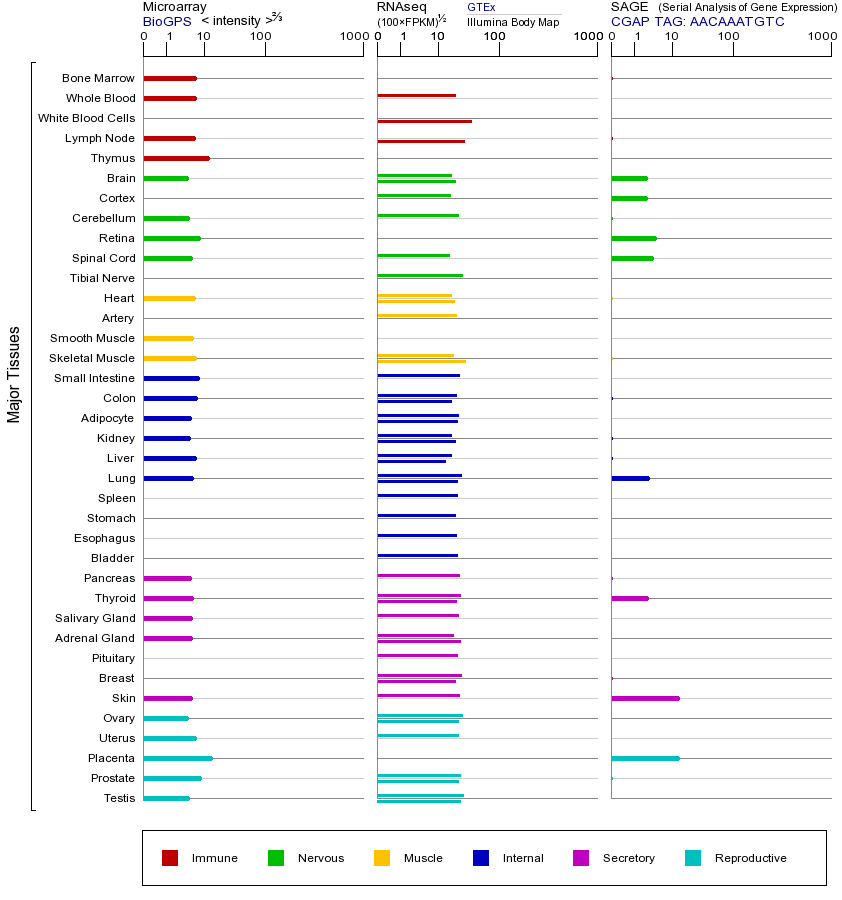
ATXN7(ataxin-7)是一种编码蛋白质的基因,属于多聚谷氨酰胺(polyQ)疾病相关基因家族,该家族还包括亨廷顿蛋白(HTT)和ATXN1-3等成员。这些基因的共同特点是含有CAG三核苷酸重复序列,其异常扩增会导致蛋白质中多聚谷氨酰胺链延长,引发神经退行性疾病。ATXN7是SCA7(脊髓小脑共济失调7型)的致病基因,其突变会导致小脑、视网膜和大脑神经元的功能障碍。ATXN7蛋白是STAGA(SPT3-TAF9-GCN5乙酰转移酶)转录共激活复合物的组成部分,参与组蛋白乙酰化和染色质重塑,调控基因表达。在正常状态下,ATXN7通过与其他蛋白质(如GCN5、USP22)相互作用,影响细胞周期、DNA修复和神经发育。当CAG重复次数超过37次时,突变的ATXN7蛋白会形成错误折叠的聚集体,干扰泛素-蛋白酶体系统(负责降解异常蛋白质的细胞机制),导致神经元毒性。SCA7患者表现为进行性运动失调、视力丧失和神经退化。ATXN7过表达会加剧蛋白质聚集和细胞凋亡(程序性细胞死亡),而降低表达可能影响STAGA复合物的功能,导致转录失调。此外,ATXN7的异常表达可能影响其他多聚谷氨酰胺疾病相关基因(如ATXN3)的表达,加剧神经退化。该基因家族成员均涉及CAG重复不稳定性和神经细胞特异性毒性,但不同基因的突变靶向不同脑区,例如ATXN7主要影响视网膜和小脑。研究ATXN7有助于理解神经退行性疾病的共同机制,并为靶向治疗(如基因沉默或蛋白质降解增强剂)提供依据。
The autosomal dominant cerebellar ataxias (ADCA) are a heterogeneous group of neurodegenerative disorders characterized by progressive degeneration of the cerebellum, brain stem and spinal cord. Clinically, ADCA has been divided into three groups: ADCA types I-III. ADCAI is genetically heterogeneous, with five genetic loci, designated spinocerebellar ataxia (SCA) 1, 2, 3, 4 and 6, being assigned to five different chromosomes. ADCAII, which always presents with retinal degeneration (SCA7), and ADCAIII often referred to as the 'pure' cerebellar syndrome (SCA5), are most likely homogeneous disorders. Several SCA genes have been cloned and shown to contain CAG repeats in their coding regions. ADCA is caused by the expansion of the CAG repeats, producing an elongated polyglutamine tract in the corresponding protein. The expanded repeats are variable in size and unstable, usually increasing in size when transmitted to successive generations. This locus has been mapped to chromosome 3, and it has been determined that the diseased allele associated with spinocerebellar ataxia-7 contains 38-130 CAG repeats (near the N-terminus), compared to 7-17 in the normal allele. The encoded protein is a component of the SPT3/TAF9/GCN5 acetyltransferase (STAGA) and TBP-free TAF-containing (TFTC) chromatin remodeling complexes, and it thus plays a role in transcriptional regulation. Alternative splicing results in multiple transcript variants. [provided by RefSeq, Apr 2010]
Gene Ontology
Subcellular localization of ATXN7 (and its protein):
- plasma membrane
- cytoplasm
- extracellular
- golgi
- vesicle
- cytoskeleton
- endoplasmic reticulum
- nucleus
- endosome
- lysosome
- mitochondrion
Gene Ontology (GO) terms for ATXN7:
| Interacting Gene | Interaction | Source/Score |
| Name |
|---|
| Chromatin modifying enzymes |
| Chromatin organization |
| HATs acetylate histones |
| Disease | Score | NofPmids | NofSnps | Source |
| Spinocerebellar Ataxia Type 7 | 0.332214884 | 45 | 1 | BeFree_CLINVAR_MGD_ORPHANET |
| Ataxia, Spinocerebellar | 0.14544698 | 18 | 0 | BeFree_CTD_human_GAD_LHGDN |
| Arsenic Poisoning | 0.12 | 1 | 0 | CTD_human |
| Dermatologic disorders | 0.12 | 1 | 0 | CTD_human |
| Cerebellar Ataxia | 0.007262917 | 10 | 0 | BeFree_GAD_LHGDN |
| Neurodegenerative Disorders | 0.006253095 | 14 | 0 | BeFree_LHGDN |
| Retinal Degeneration | 0.004624443 | 7 | 0 | BeFree_LHGDN |
| Machado-Joseph Disease | 0.003538676 | 4 | 0 | BeFree_LHGDN |
| Muscle hypotonia | 0.003267234 | 2 | 0 | BeFree_LHGDN |
| Cardiomegaly | 0.00272435 | 1 | 0 | LHGDN |

Contact
No. 2 Wenbo Road, Zhangqiu District, Jinan, Shandong
Qilu Normal University · Genelibs Bioinformatics Lab
750 Shunhua Rd, Jinan
2F, Bldg F, University Science Park
Tel: 0531-88819269
WeChat Official Account
Follow our WeChat subscription account for real-time updates and the latest in medical and biological research.
Business Email
E-mail: product@genelibs.com

Copyright © 2026.Genelibs Jinan Honghui Biotechnology Co., Ltd. 鲁ICP备20007159号-2
