
DCC (DCC netrin 1 receptor)

symbol
DCC
locus group
protein-coding gene
location
18q21.2
gene_family
Fibronectin type III domain containing|I-set domain containing|Immunoglobulin-like domain containing
alias symbol
IGDCC1|NTN1R1
alias name
immunoglobulin superfamily, DCC su…
entrez id
1630
ensembl gene id
ENSG00000187323
ucsc gene id
uc002lfe.3
refseq accession
NM_005215
hgnc_id
HGNC:2701
approved reserved
1990-05-25
18q21.2
ChineseEnglish

Located on human chromosome 18, the *DCC* (Deleted in Colorectal Cancer) gene encodes a transmembrane receptor that belongs to the immunoglobulin superfamily (IgSF) and is closely related to the netrin-1 receptor family. As a member of this family, DCC possesses immunoglobulin-like domains that facilitate cell-cell recognition and signaling, sharing functional similarities with other members such as neogenin in mediating intercellular interactions. During neural development, DCC plays a pivotal role in axon guidance and neuronal migration by binding to the ligand netrin-1, thereby directing the proper growth of nerve fibers; genetic knockout studies in animal models have confirmed that the absence of DCC results in significant axon guidance defects and neurodevelopmental abnormalities, linking its dysregulation to potential neurodevelopmental disorders. Beyond the nervous system, DCC is expressed in various tissues, including the colon, where it functions as a tumor suppressor. Its activity regulates critical cellular processes, including adhesion, migration, and apoptosis, through the activation of downstream signaling pathways. The gene’s name derives from its frequent deletion in colorectal cancer, a condition where loss-of-function mutations or epigenetic silencing via DNA methylation disrupts normal apoptotic mechanisms and promotes tumorigenesis. Reduced DCC expression is also associated with the progression of other malignancies, such as gastric and pancreatic cancers, where it may facilitate abnormal cell proliferation and metastasis. Conversely, overexpression of DCC has been shown to inhibit tumor cell growth and induce apoptosis, underscoring its protective role against cancer. Furthermore, specific single nucleotide polymorphisms (SNPs) in the *DCC* gene have been implicated in the susceptibility to neuropsychiatric conditions, including schizophrenia, highlighting the gene’s broader relevance in both oncology and neurological health.
Nucleotide sequence of DCC:[NCBI]
Loading Gene Browser...
Protein Sequence
1MENSLRCVWV PKLAFVLFGA SLFSAHLQVT GFQIKAFTAL
41RFLSEPSDAV TMRGGNVLLD CSAESDRGVP VIKWKKDGIH
81 LALGMDERK QQLSNGSLLI QNILHSRHHK PDEGLYQCEA
121SLGDSGSIIS RTAKVAVAGP LRFLSQTESV TAFMGDTVLL
161K CEVIGEPM PTIHWQKNQQ DLTPIPGDSR VVVLPSGALQ
201ISRLQPGDIG IYRCSARNPA SSRTGNEAEV RILSDPGLHR
241QL YFLQRPS NVVAIEGKDA VLECCVSGYP PPSFTWLRGE
281EVIQLRSKKY SLLGGSNLLI SNVTDDDSGM YTCVVTYKNE
321NIS ASAELT VLVPPWFLNH PSNLYAYESM DIEFECTVSG
361KPVPTVNWMK NGDVVIPSDY FQIVGGSNLR ILGVVKSDEG
401FYQC VAENE AGNAQTSAQL IVPKPAIPSS SVLPSAPRDV
441VPVLVSSRFV RLSWRPPAEA KGNIQTFTVF FSREGDNRER
481ALNTT QPGS LQLTVGNLKP EAMYTFRVVA YNEWGPGESS
521QPIKVATQPE LQVPGPVENL QAVSTSPTSI LITWEPPAYA
561NGPVQG YRL FCTEVSTGKE QNIEVDGLSY KLEGLKKFTE
601YSLRFLAYNR YGPGVSTDDI TVVTLSDVPS APPQNVSLEV
641VNSRSIK VS WLPPPSGTQN GFITGYKIRH RKTTRRGEME
681TLEPNNLWYL FTGLEKGSQY SFQVSAMTVN GTGPPSNWYT
721AETPENDL D ESQVPDQPSS LHVRPQTNCI IMSWTPPLNP
761NIVVRGYIIG YGVGSPYAET VRVDSKQRYY SIERLESSSH
801YVISLKAFN NAGEGVPLYE SATTRSITDP TDPVDYYPLL
841DDFPTSVPDL STPMLPPVGV QAVALTHDAV RVSWADNSVP
881KNQKTSEVRL YTVRWRTSF SASAKYKSED TTSLSYTATG
921LKPNTMYEFS VMVTKNRRSS TWSMTAHATT YEAAPTSAPK
961DLTVITREGK P RAVIVSWQ PPLEANGKIT AYILFYTLDK
1001NIPIDDWIME TISGDRLTHQ IMDLNLDTMY YFRIQARNSK
1041GVGPLSDPIL FR TLKVEHP DKMANDQGRH GDGGYWPVDT
1081NLIDRSTLNE PPIGQMHPPH GSVTPQKNSN LLVIIVVTVG
1121VITVLVVVIV AVI CTRRSS AQQRKKRATH SAGKRKGSQK
1161DLRPPDLWIH HEEMEMKNIE KPSGTDPAGR DSPIQSCQDL
1201TPVSHSQSET QLGS KSTSH SGQDTEEAGS SMSTLERSLA
1241ARRAPRAKLM IPMDAQSNNP AVVSAIPVPT LESAQYPGIL
1281PSPTCGYPHP QFTLR PVPF PTLSVDRGFG AGRSQSVSEG
1321PTTQQPPMLP PSQPEHSSSE EAPSRTIPTA CVRPTHPLRS
1361FANPLLPPPM SAIEPK VPY TPLLSQPGPT LPKTHVKTAS
1401LGLAGKARSP LLPVSVPTAP EVSEESHKPT EDSANVYEQD
1441DLSEQMASLE GLMKQLN AI TGSAF
Structure predicted by AlphaFold DB(UniProt: P43146). Color indicates pLDDT confidence (dark blue = high, yellow/orange = low).
SNP variants of DCC:           Showing partial SNPs
rs714       rs2256       rs16920       rs168332       rs186984       rs238422       rs347534       rs347535       rs347536       rs347537       rs347538       rs347539       rs347540       rs347541       rs347542       rs347543       rs347544      

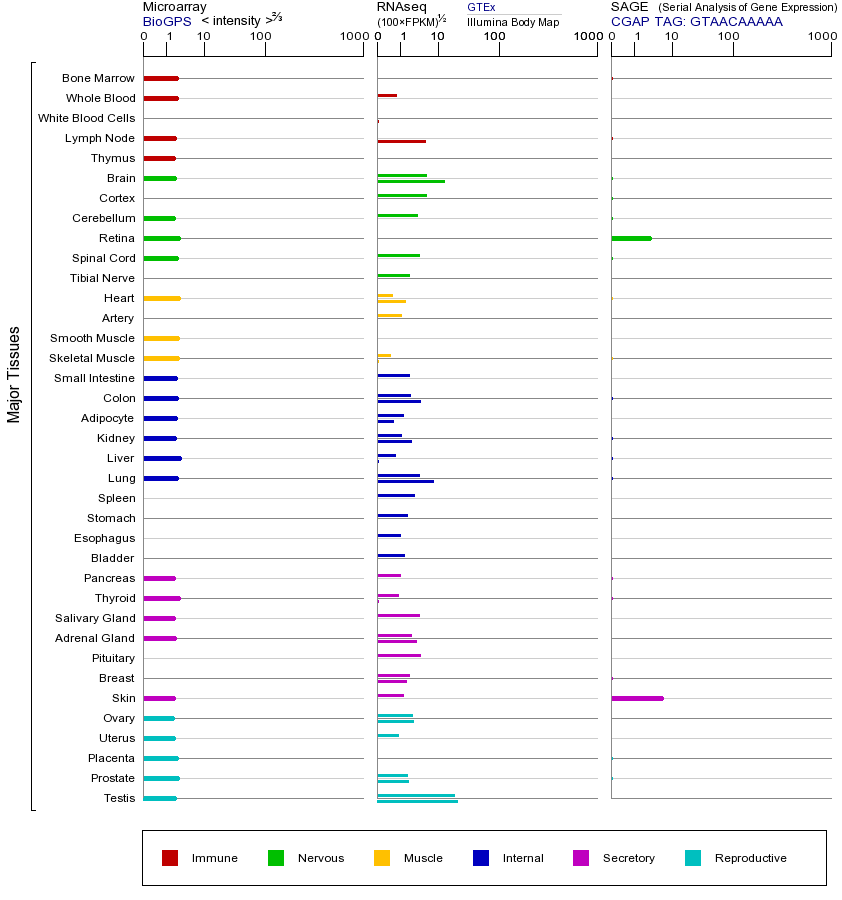
Tissue expression of DCC:    [UniProt]

Gene expression across tissues
Forward Primer
Forward Tm
Reverse Primer
Reverse Tm
Score
ATGTGAGGCATCTTTAGGAG
57
CTAGACTAAGTAGGACCTGCT
58
GGGACTTTACCAATGTGAGG
58
TTTCATTGCCCTGCTACTG
58
GACTTTACCAATGTGAGGCA
58
ATATTTGCTCCTGCTACTGC
58
AGTCTCTGGAAAGCCTGTG
59
TGCTTCCTCCCACTATCTG
58
CTCCTGAAGCTTGAAGTTCC
59
CCAGAGACTGTACATTCAAACTC
59
CCTGGGCAACATATAGACCA
59
TGAGTAGCACTGTGTCTCC
59
AGTCTCTGGAAAGCCTGTG
59
TGCTTCCTCCCACTATCTG
59
TCAGCCAATGTGTATGAACAG
59
GTGATGGCATTAAGCTGCT
59
CTTTGCTTCCTGTGTCTGTG
60
CTCCATCTCCACATTGGCT
60
TCAGCCAATGTGTATGAACAG
59
GTGATGGCATTAAGCTGCT
59
Transcription Factors
Target Gene
Interaction Type
PubMed References
SOX9
DCC
Activation

Subcellular localization of DCC (and its protein):

[UniProt]     [GenomeNet]

" d="M482.414,245.296c3.539,4.293,4.455,10.009,0.202,11 c-4.244,0.996-4.983-10.983-8.293-8.438c-5.271,4.08,9.834,12.271,5.144,17.287c-3.717,3.607-6.172-5.75-10.839-1.976 c-4.673,3.776,6.781,7.299,2.831,11.326c-4.354,4.045-6.979-1.449-9.837-5.517c-1.193-1.742-2.059-3.851-3.595-2.748 c-1.516,1.078-1.854,1.795-0.938,3.666c2.374,4.854,9.235,10.119,5.156,12.535c-5.636,3.346-5.044-8.871-9.426-7.574 c-4.388,1.291,2.557,10.66-1.245,11.141c-4.089,0.545-3.483-10.239-6.979-8.575c-2.522,1.206-0.929,3.071-0.938,4.899 c0.004,1.32-0.964,3.6-2.372,4.062c-3.593,1.171-8.544-1.065-10.251-3.59c-6.04-8.93,0.396-15.997,4.639-7.015 c3.023,4.642,5.182,0.834,2.839-2.219c-1.032-1.354-4.309-5.901-0.781-7.252c2.904-1.113,4.271,1.941,5.985,4.592 c2.61,4.016,5.485,0.117,3.031-3.414c-1.828-2.633-2.74-3.803,3.156-7.42c6.405-4.369,6.52,3.869,10.077,0.646 c2.309-1.832-4.783-5.149,0.06-8.995c2.896-2.293,5.18,6.207,7.961,3.516c3.523-2.737-7.717-7.369,0.117-11.736 C473.413,240.77,480.519,242.891,482.414,245.296z"/> Extracellular space Cytosol Plasma membrane Cytoskeleton Lysosome Endosome Peroxisome ER Golgi Apparatus Nucleus Mitochondrion 0 1 2 3 4 5 Confidence
  • plasma membrane
  • cytoplasm
  • extracellular
  • golgi
  • vesicle
  • cytoskeleton
  • endoplasmic reticulum
  • nucleus
  • endosome
  • lysosome
  • mitochondrion

Gene Ontology (GO) terms for DCC:

GO ID
Protein
Source DB
GO:0005042
E7EQM8 (UniProtKB)
IEA
GO:0006915
E7EQM8 (UniProtKB)
IEA
GO:0007411
E7EQM8 (UniProtKB)
IEA
GO:0016021
E7EQM8 (UniProtKB)
IEA
GO:0038007
E7EQM8 (UniProtKB)
IEA
GO:0005042
H0Y2Q5 (UniProtKB)
IEA
GO:0006915
H0Y2Q5 (UniProtKB)
IEA
GO:0007411
H0Y2Q5 (UniProtKB)
IEA
GO:0038007
H0Y2Q5 (UniProtKB)
IEA
GO:0005042
J3QKL2 (UniProtKB)
IEA
GO:0006915
J3QKL2 (UniProtKB)
IEA
GO:0007411
J3QKL2 (UniProtKB)
IEA
GO:0038007
J3QKL2 (UniProtKB)
IEA
GO:0005042
J3QLB0 (UniProtKB)
IEA
GO:0006915
J3QLB0 (UniProtKB)
IEA
GO:0007411
J3QLB0 (UniProtKB)
IEA
GO:0038007
J3QLB0 (UniProtKB)
IEA
GO:0005042
J3QLT8 (UniProtKB)
IEA
GO:0006915
J3QLT8 (UniProtKB)
IEA
GO:0007411
J3QLT8 (UniProtKB)
IEA
GO:0038007
J3QLT8 (UniProtKB)
IEA
GO:0005042
J3QQJ6 (UniProtKB)
IEA
GO:0006915
J3QQJ6 (UniProtKB)
IEA
GO:0007411
J3QQJ6 (UniProtKB)
IEA
GO:0038007
J3QQJ6 (UniProtKB)
IEA
GO:0005042
J3QRL3 (UniProtKB)
IEA
GO:0006915
J3QRL3 (UniProtKB)
IEA
GO:0007411
J3QRL3 (UniProtKB)
IEA
GO:0038007
J3QRL3 (UniProtKB)
IEA
GO:0005042
J3QRM6 (UniProtKB)
IEA
GO:0006915
J3QRM6 (UniProtKB)
IEA
GO:0007411
J3QRM6 (UniProtKB)
IEA
GO:0038007
J3QRM6 (UniProtKB)
IEA
GO:0005042
J3QS93 (UniProtKB)
IEA
GO:0006915
J3QS93 (UniProtKB)
IEA
GO:0007411
J3QS93 (UniProtKB)
IEA
GO:0016021
J3QS93 (UniProtKB)
IEA
GO:0038007
J3QS93 (UniProtKB)
IEA
GO:0001764
P43146 (UniProtKB)
IEA
GO:0004888
P43146 (UniProtKB)
TAS
GO:0005042
P43146 (UniProtKB)
IEA
GO:0005515
P43146 (UniProtKB)
IPI
GO:0005515
P43146 (UniProtKB)
IPI
GO:0005515
P43146 (UniProtKB)
IPI
GO:0005515
P43146 (UniProtKB)
IPI
GO:0005515
P43146 (UniProtKB)
IPI
GO:0005515
P43146 (UniProtKB)
IPI
GO:0005515
P43146 (UniProtKB)
IPI
GO:0005515
P43146 (UniProtKB)
IPI
GO:0005515
P43146 (UniProtKB)
IPI
GO:0005829
P43146 (UniProtKB)
TAS
GO:0005886
P43146 (UniProtKB)
TAS
GO:0005886
P43146 (UniProtKB)
TAS
GO:0005886
P43146 (UniProtKB)
TAS
GO:0005886
P43146 (UniProtKB)
TAS
GO:0005886
P43146 (UniProtKB)
TAS
GO:0005886
P43146 (UniProtKB)
TAS
GO:0005886
P43146 (UniProtKB)
TAS
GO:0005886
P43146 (UniProtKB)
TAS
GO:0005886
P43146 (UniProtKB)
TAS
GO:0005886
P43146 (UniProtKB)
TAS
GO:0005886
P43146 (UniProtKB)
TAS
GO:0005886
P43146 (UniProtKB)
TAS
GO:0005886
P43146 (UniProtKB)
TAS
GO:0005886
P43146 (UniProtKB)
TAS
GO:0005886
P43146 (UniProtKB)
TAS
GO:0005886
P43146 (UniProtKB)
TAS
GO:0005886
P43146 (UniProtKB)
TAS
GO:0006915
P43146 (UniProtKB)
TAS
GO:0007409
P43146 (UniProtKB)
TAS
GO:0007411
P43146 (UniProtKB)
TAS
GO:0010977
P43146 (UniProtKB)
TAS
GO:0016021
P43146 (UniProtKB)
IEA
GO:0021965
P43146 (UniProtKB)
IEA
GO:0030424
P43146 (UniProtKB)
IEA
GO:0033563
P43146 (UniProtKB)
IEA
GO:0033564
P43146 (UniProtKB)
IEA
GO:0038007
P43146 (UniProtKB)
IEA
GO:0048671
P43146 (UniProtKB)
TAS
GO:0097192
P43146 (UniProtKB)
TAS
GO:1901214
P43146 (UniProtKB)
IMP
GO:2000171
P43146 (UniProtKB)
TAS

microRNAs potentially regulating DCC:     

String
BioGrid
IntAct
mentha
MINT
Reactome
Loading…
Interacting Gene Interaction Source/Score
Disease Score NofPmids NofSnps Source
MIRROR MOVEMENTS 1 0.24 0 7 CLINVAR_CTD_human
Colorectal Neoplasms 0.12953026 9 2 BeFree_CTD_human_LHGDN
Colon Carcinoma 0.122442977 9 1 BeFree_CLINVAR
Malignant neoplasm of gallbladder 0.120542884 3 1 BeFree_GWASCAT
Obesity 0.12 1 1 GWASCAT
Eosinophilic esophagitis 0.12 1 1 GWASCAT
melanoma 0.12 1 0 CTD_human
Reperfusion Injury 0.08 1 0 RGD
Neuritis, Autoimmune, Experimental 0.08 1 0 RGD
Colorectal Cancer 0.014039032 44 2 BeFree_GAD
Acute Sector Cancer Physiotherapy Service Provision and Workforce.
Guinan EM, Keating R, Kinsella F, Moylan N, O'Riordan J, Theron F, Walsh A, Adelakun S, Al Rashdi S, Elliott J, Sheill G Ir Med J 2026-08-20
ACCELERATE-BASSO: early experiences and emerging best practices for ontology development in behavioral and social science research.
Yu Y, Kang L, Michie S, Duncan WD, Beverley J, Li F, McNeil DW, Huo N, Li H, Horridge M, Musen MA, Bian J, Tao C J Biomed Semantics IF: 2.6 2026-07-14
Quantifying the Linguistic Complexity of Pan-Homophonic Events in Stock Market Volatility Dynamics.
Zhang Y, Tian J, Zou Y, Zhang X, Cai X Entropy (Basel) IF: 1.821 2026-01-12
Enhancement of Collagen and Elastic Fibers by Direct Contact Cooling-Based Monopolar Radiofrequency in a Minipig Model.
Goo H, Kim C, Hong N, Lee YJ, Kim EY, Choi SH, Park JO, Baek MH, Hwang SJ, Lee JW, Lee W, Kim R, Lee Y, Ahn JC Clin Cosmet Investig Dermatol IF: 2.5 None
The genetic architecture of fibromyalgia across 2.5 million individuals.
Kerrebijn I, Bjornsdottir G, Arbabi K, Urpa L, Haapaniemi H, Thorleifsson G, Stefansdottir L, Frangakis S, Valliere J, Kunorozva L, Abner E, Ji C, Kangur M, Aagaard B, Bliddal H, Brunak S, Bruun MT, Didriksen M, Erikstrup C, Finer S, Geirsson AJ, Gudbjartsson DF, Hansen TF, van Heel D, Jonsdottir I, Knight S, Knowlton KU, Mikkelsen C, Nadauld LD, Olafsdottir TA, Ostrowski SR, Pedersen OBV, Saevarsdottir S, Skuladottir AT, Sørensen E, Stefansson H, Sulem P, Sveinsson OA, Thorlacius GE, Thorsteinsdottir U, Ullum H, Vikingsson A, Werge TM, Chronic Pain Genomics Consortium, FinnGen, DBDS Genomic Consortium, Estonian Biobank Research Team, Genes & Health Research Team, Saxena R, Stefansson K, Brummett CM, Glintborg B, Clauw DJ, Thorgeirsson TE, Williams FMK, Sinnott-Armstrong N, Ollila HM, Wainberg M Nat Med IF: 52.5 2026-08-00
A Decade of T3P® in Organic Synthesis: Greener Coupling and Condensation Reactions.
Kamsali MMA, Varala R, Alakonda LM, Seema V, Alam MM Curr Org Synth IF: 2.6 2026-07-25
GAS2 Co-Expression Networks in Breast Cancer: Identification of Potential Biomarkers and Therapeutic Targets.
Rahimi S, Haghi M, Najarzadeh D, Hosseinpour Feizi MA Adv Pharm Bull IF: 4.7 2026-05-00

Loading comments...

Log in to post comments Log In Sign Up

Contact

No. 2 Wenbo Road, Zhangqiu District, Jinan, Shandong

Qilu Normal University · Genelibs Bioinformatics Lab

750 Shunhua Rd, Jinan

2F, Bldg F, University Science Park

Tel: 0531-88819269

WeChat Official Account

Follow our WeChat subscription account for real-time updates and the latest in medical and biological research.


Business Email

E-mail: product@genelibs.com

