
TAF1C (TATA-box binding protein associated factor, RNA polymerase I subunit C)

symbol
TAF1C
locus group
protein-coding gene
location
16q24.1
gene_family
-
alias symbol
TAFI110|TAFI95|SL1|MGC:39976
alias name
None
entrez id
9013
ensembl gene id
ENSG00000103168
ucsc gene id
uc002fhn.4
refseq accession
NM_139353
hgnc_id
HGNC:11534
approved reserved
1999-01-18
16q24.1
ChineseEnglish

TAF1C, a member of the TATA-box binding protein-associated factor (TAF) gene family, functions as a critical subunit of the general transcription factor TFIID, which is essential for the initiation of eukaryotic transcription. While TAF family members typically share conserved histone fold domains that facilitate interactions with the TATA-box binding protein (TBP) to form the TFIID complex for RNA polymerase II-mediated mRNA synthesis, TAF1C exhibits a distinct dual role by also engaging with RNA polymerase I. This unique interaction allows TAF1C to regulate the transcription of ribosomal RNA (rRNA) within the nucleolus, thereby directly influencing ribosome biogenesis and the cell's capacity for protein synthesis. By modulating the production of ribosomes, TAF1C plays a pivotal role in controlling cell growth and proliferation; consequently, its dysregulation can have profound cellular consequences. Loss of TAF1C function or reduced expression leads to impaired rRNA synthesis and a deficit in ribosome production, which can suppress cell proliferation and potentially trigger apoptosis. Conversely, the overexpression of TAF1C, as observed in various malignancies including hepatocellular carcinoma and breast cancer, enhances rRNA synthesis and increases ribosome abundance, thereby accelerating protein synthesis and promoting tumor cell survival and rapid proliferation. Beyond its direct role in rRNA transcription, TAF1C may indirectly influence the expression of other genes, such as those involved in cell cycle regulation, suggesting a broader impact on overall cellular homeostasis. The aberrant expression of TAF1C in cancer contexts highlights its potential as a driver of tumorigenesis and a promising target for therapeutic intervention, although further research is required to fully elucidate its mechanistic contributions to disease progression.
Nucleotide sequence of TAF1C:[NCBI]
Loading Gene Browser...
Protein Sequence
1MDFPSSLRPA LFLTGPLGLS DVPDLSFMCS WRDALTLPEA
41QPQNSENGAL HVTKDLLWEP ATPGPLPMLP PLIDPWDPGL
81 TARDLLFRG GCRYRKRPRV VLDVTEQISR FLLDHGDVAF
121APLGKLMLEN FKLEGAGSRT KKKTVVSVKK LLQDLGGHQP
161W GCPWAYLS NRQRRFSILG GPILGTSVAS HLAELLHEEL
201VLRWEQLLLD EACTGGALAW VPGRTPQFGQ LVYPAGGAQD
241RL HFQEVVL TPGDNPQFLG KPGRIQLQGP VRQVVTCTVQ
281GESKALIYTF LPHWLTCYLT PGPFHPSSAL LAVRSDYHCA
321VWK FGKQWQ PTLLQAMQVE KGATGISLSP HLPGELAICS
361RSGAVCLWSP EDGLRQIYRD PETLVFRDSS SWRWADFTAH
401PRVL TVGDR TGVKMLDTQG PPGCGLLLFR LGAEASCQKG
441ERVLLTQYLG HSSPKCLPPT LHLVCTQFSL YLVDERLPLV
481PMLKW NHGL PSPLLLARLL PPPRPSCVQP LLLGGQGGQL
521QLLHLAGEGA SVPRLAGPPQ SLPSRIDSLP AFPLLEPKIQ
561WRLQER LKA PTIGLAAVVP PLPSAPTPGL VLFQLSAAGD
601VFYQQLRPQV DSSLRRDAGP PGDTQPDCHA PTASWTSQDT
641AGCSQWL KA LLKVPLAPPV WTAPTFTHRQ MLGSTELRRE
681EEEGQRLGVL RKAMARGQLL LQRDLGSLPA AEPPPAPESG
721LEDKLSER L GEAWAGRGAA WWERQQGRTS EPGRQTRRPK
761RRTQLSSSFS LSGHVDPSED TSSPHSPEWP PADALPLPPT
801TPPSQELTP DACAQGVPSE QRQMLRDYMA KLPPQRDTPG
841CATTPPHSQA SSVRATRSQQ HTPVLSSSQP LRKKPRMGF
Structure predicted by AlphaFold DB(UniProt: Q15572). Color indicates pLDDT confidence (dark blue = high, yellow/orange = low).
SNP variants of TAF1C:           Showing partial SNPs
rs8692       rs1056612       rs1056616       rs2288024       rs2288025       rs3208968       rs4150180       rs4150181       rs4150182       rs4150183       rs4150184       rs4150185       rs4150186       rs4150187       rs4150188       rs4150189       rs4150190      

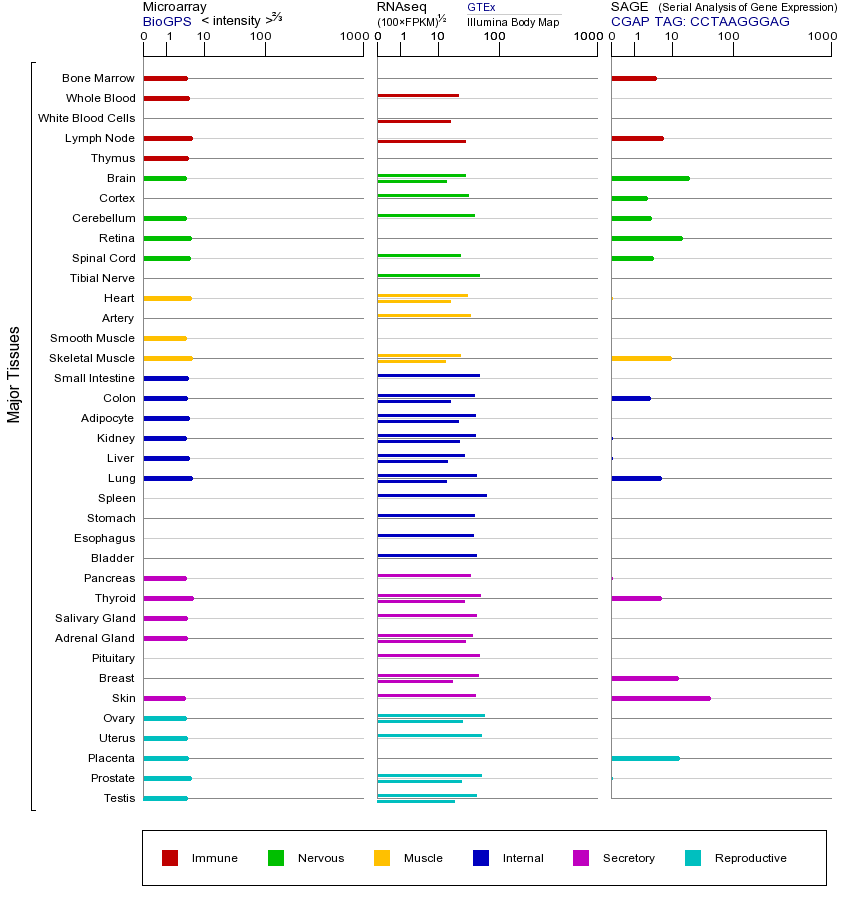
Tissue expression of TAF1C:    [UniProt]

Gene expression across tissues
Forward Primer
Forward Tm
Reverse Primer
Reverse Tm
Score
CCCAGAACTCAGAGAATGGG
60
ATCTGCTCAGTCACATCCAG
60
TTGAGATTTCCCTCGTGGT
59
CTACTGTCAAGCACAGTGC
59
CAGGCTGCATTTCCAAGAG
59
TTTACCAAACTTCCACACGG
59
CCCAGAACTCAGAGAATGGG
60
ATCTGCTCAGTCACATCCAG
60
AATTTCAAGCTGGAGGGAG
57
TTCTTCACACTGACCACTG
57
AGTAGGAAGACGATGCTCAG
59
GAAGTCCATCATTTACAGACTACAC
60
GTTTGGTAAACAGTGGCAG
57
AGGGTCCCTGTAGATTTGC
59
GACTGTGCTTAGTGACCTG
58
CATGATCCAAGAGGAACCG
58
CCCAGAACTCAGAGAATGG
57
ATGATCCAAGAGGAACCGG
59
CTCGTCTGTACCCAGTTCTC
60
CTGGAAGGAAGAGACTGGG
59

Subcellular localization of TAF1C (and its protein):

[UniProt]     [GenomeNet]

" d="M482.414,245.296c3.539,4.293,4.455,10.009,0.202,11 c-4.244,0.996-4.983-10.983-8.293-8.438c-5.271,4.08,9.834,12.271,5.144,17.287c-3.717,3.607-6.172-5.75-10.839-1.976 c-4.673,3.776,6.781,7.299,2.831,11.326c-4.354,4.045-6.979-1.449-9.837-5.517c-1.193-1.742-2.059-3.851-3.595-2.748 c-1.516,1.078-1.854,1.795-0.938,3.666c2.374,4.854,9.235,10.119,5.156,12.535c-5.636,3.346-5.044-8.871-9.426-7.574 c-4.388,1.291,2.557,10.66-1.245,11.141c-4.089,0.545-3.483-10.239-6.979-8.575c-2.522,1.206-0.929,3.071-0.938,4.899 c0.004,1.32-0.964,3.6-2.372,4.062c-3.593,1.171-8.544-1.065-10.251-3.59c-6.04-8.93,0.396-15.997,4.639-7.015 c3.023,4.642,5.182,0.834,2.839-2.219c-1.032-1.354-4.309-5.901-0.781-7.252c2.904-1.113,4.271,1.941,5.985,4.592 c2.61,4.016,5.485,0.117,3.031-3.414c-1.828-2.633-2.74-3.803,3.156-7.42c6.405-4.369,6.52,3.869,10.077,0.646 c2.309-1.832-4.783-5.149,0.06-8.995c2.896-2.293,5.18,6.207,7.961,3.516c3.523-2.737-7.717-7.369,0.117-11.736 C473.413,240.77,480.519,242.891,482.414,245.296z"/> Extracellular space Cytosol Plasma membrane Cytoskeleton Lysosome Endosome Peroxisome ER Golgi Apparatus Nucleus Mitochondrion 0 1 2 3 4 5 Confidence
  • plasma membrane
  • cytoplasm
  • extracellular
  • golgi
  • vesicle
  • cytoskeleton
  • endoplasmic reticulum
  • nucleus
  • endosome
  • lysosome
  • mitochondrion

Gene Ontology (GO) terms for TAF1C:

GO ID
Protein
Source DB
GO:0000120
Q15572 (UniProtKB)
IBA
GO:0001164
Q15572 (UniProtKB)
IDA
GO:0005515
Q15572 (UniProtKB)
IPI
GO:0005515
Q15572 (UniProtKB)
IPI
GO:0005515
Q15572 (UniProtKB)
IPI
GO:0005515
Q15572 (UniProtKB)
IPI
GO:0005654
Q15572 (UniProtKB)
IDA
GO:0005654
Q15572 (UniProtKB)
TAS
GO:0005654
Q15572 (UniProtKB)
TAS
GO:0005654
Q15572 (UniProtKB)
TAS
GO:0005654
Q15572 (UniProtKB)
TAS
GO:0005654
Q15572 (UniProtKB)
TAS
GO:0005654
Q15572 (UniProtKB)
TAS
GO:0005654
Q15572 (UniProtKB)
TAS
GO:0005654
Q15572 (UniProtKB)
TAS
GO:0005654
Q15572 (UniProtKB)
TAS
GO:0005654
Q15572 (UniProtKB)
TAS
GO:0005654
Q15572 (UniProtKB)
TAS
GO:0006355
Q15572 (UniProtKB)
IEA
GO:0006360
Q15572 (UniProtKB)
TAS
GO:0006361
Q15572 (UniProtKB)
TAS
GO:0006361
Q15572 (UniProtKB)
TAS
GO:0006362
Q15572 (UniProtKB)
TAS
GO:0006363
Q15572 (UniProtKB)
TAS
GO:0006366
Q15572 (UniProtKB)
TAS
GO:0043231
Q15572 (UniProtKB)
IDA
GO:0045815
Q15572 (UniProtKB)
TAS

microRNAs potentially regulating TAF1C:     

BioGrid
IntAct
mentha
MINT
Reactome
Loading…
Interacting Gene Interaction Source/Score
Disease Score NofPmids NofSnps Source
Autistic Disorder 0.242367032 2 1 CTD_human_GAD_GWASCAT
Colorectal Cancer 0.000271442 1 0 BeFree
Colorectal Carcinoma 0.000271442 1 0 BeFree
Carcinogenesis 0.000271442 1 0 BeFree
Genome-wide CRISPR screen identifies TAF1C as an epigenetic determinant of lipid deposition via ACSL4-dependent ferroptosis in MASLD.
Gong Y, Chen J, Zhang F, Huang R, Mai L, Xu Y, Zhao W, Wei X, Zheng J, Liu X, Chen J J Adv Res IF: 17.1 2026-04-22
Mouse variants in Taf1c result in reduced survival to birth.
Watts JL, Willeke L, Stottmann RW Dev Biol IF: 2.1 2025-12-00
Integrated analysis of whole-exome sequencing and transcriptome profiling in males with autism spectrum disorders.
Codina-Solà Marta, Rodríguez-Santiago Benjamín, Homs Aïda, Santoyo Javier, Rigau Maria, Aznar-Laín Gemma, Del Campo Miguel, Gener Blanca, Gabau Elisabeth, Botella María Pilar, Gutiérrez-Arumí Armand, Antiñolo Guillermo, Pérez-Jurado Luis Alberto, Cuscó Ivon Mol Autism 2015-05-13
Changes in rRNA transcription influence proliferation and cell fate within a stem cell lineage.
Zhang Qiao, Shalaby Nevine A, Buszczak Michael Science IF: 47.3 2014-02-04
Differential copy number aberrations in novel candidate genes associated with progression from in situ to invasive ductal carcinoma of the breast.
Liao Shaoxi, Desouki Mohamed M, Gaile Daniel P, Shepherd Lori, Nowak Norma J, Conroy Jeffrey, Barry William T, Geradts Joseph Genes Chromosomes Cancer IF: 2.3 2013-07-29
Mechanical loading induces the expression of a Pol I regulon at the onset of skeletal muscle hypertrophy.
von Walden Ferdinand, Casagrande Vandre, Östlund Farrants Ann-Kristin, Nader Gustavo A Am J Physiol Cell Physiol IF: 5.4 2012-07-23
A genome-wide scan for common alleles affecting risk for autism.
Anney Richard, Klei Lambertus, Pinto Dalila, Regan Regina, Conroy Judith, Magalhaes Tiago R, Correia Catarina, Abrahams Brett S, Sykes Nuala, Pagnamenta Alistair T, Almeida Joana, Bacchelli Elena, Bailey Anthony J, Baird Gillian, Battaglia Agatino, Berney Tom, Bolshakova Nadia, Bölte Sven, Bolton Patrick F, Bourgeron Thomas, Brennan Sean, Brian Jessica, Carson Andrew R, Casallo Guillermo, Casey Jillian, Chu Su H, Cochrane Lynne, Corsello Christina, Crawford Emily L, Crossett Andrew, Dawson Geraldine, de Jonge Maretha, Delorme Richard, Drmic Irene, Duketis Eftichia, Duque Frederico, Estes Annette, Farrar Penny, Fernandez Bridget A, Folstein Susan E, Fombonne Eric, Freitag Christine M, Gilbert John, Gillberg Christopher, Glessner Joseph T, Goldberg Jeremy, Green Jonathan, Guter Stephen J, Hakonarson Hakon, Heron Elizabeth A, Hill Matthew, Holt Richard, Howe Jennifer L, Hughes Gillian, Hus Vanessa, Igliozzi Roberta, Kim Cecilia, Klauck Sabine M, Kolevzon Alexander, Korvatska Olena, Kustanovich Vlad, Lajonchere Clara M, Lamb Janine A, Laskawiec Magdalena, Leboyer Marion, Le Couteur Ann, Leventhal Bennett L, Lionel Anath C, Liu Xiao-Qing, Lord Catherine, Lotspeich Linda, Lund Sabata C, Maestrini Elena, Mahoney William, Mantoulan Carine, Marshall Christian R, McConachie Helen, McDougle Christopher J, McGrath Jane, McMahon William M, Melhem Nadine M, Merikangas Alison, Migita Ohsuke, Minshew Nancy J, Mirza Ghazala K, Munson Jeff, Nelson Stanley F, Noakes Carolyn, Noor Abdul, Nygren Gudrun, Oliveira Guiomar, Papanikolaou Katerina, Parr Jeremy R, Parrini Barbara, Paton Tara, Pickles Andrew, Piven Joseph, Posey David J, Poustka Annemarie, Poustka Fritz, Prasad Aparna, Ragoussis Jiannis, Renshaw Katy, Rickaby Jessica, Roberts Wendy, Roeder Kathryn, Roge Bernadette, Rutter Michael L, Bierut Laura J, Rice John P, Salt Jeff, Sansom Katherine, Sato Daisuke, Segurado Ricardo, Senman Lili, Shah Naisha, Sheffield Val C, Soorya Latha, Sousa Inês, Stoppioni Vera, Strawbridge Christina, Tancredi Raffaella, Tansey Katherine, Thiruvahindrapduram Bhooma, Thompson Ann P, Thomson Susanne, Tryfon Ana, Tsiantis John, Van Engeland Herman, Vincent John B, Volkmar Fred, Wallace Simon, Wang Kai, Wang Zhouzhi, Wassink Thomas H, Wing Kirsty, Wittemeyer Kerstin, Wood Shawn, Yaspan Brian L, Zurawiecki Danielle, Zwaigenbaum Lonnie, Betancur Catalina, Buxbaum Joseph D, Cantor Rita M, Cook Edwin H, Coon Hilary, Cuccaro Michael L, Gallagher Louise, Geschwind Daniel H, Gill Michael, Haines Jonathan L, Miller Judith, Monaco Anthony P, Nurnberger John I, Paterson Andrew D, Pericak-Vance Margaret A, Schellenberg Gerard D, Scherer Stephen W, Sutcliffe James S, Szatmari Peter, Vicente Astrid M, Vieland Veronica J, Wijsman Ellen M, Devlin Bernie, Ennis Sean, Hallmayer Joachim Hum Mol Genet IF: 3.1 2011-03-01
Genomic localization of the human genes TAF1A, TAF1B and TAF1C, encoding TAF(I)48, TAF(I)63 and TAF(I)110 subunits of class I general transcription initiation factor SL1.
Di Pietro C, Rapisarda A, Amico V, Bonaiuto C, Viola A, Scalia M, Motta S, Amato A, Engel H, Messina A, Sichel G, Grzeschik K, Purrello M Cytogenet Cell Genet 2000-08-09

Loading comments...

Log in to post comments Log In Sign Up

Contact

No. 2 Wenbo Road, Zhangqiu District, Jinan, Shandong

Qilu Normal University · Genelibs Bioinformatics Lab

750 Shunhua Rd, Jinan

2F, Bldg F, University Science Park

Tel: 0531-88819269

WeChat Official Account

Follow our WeChat subscription account for real-time updates and the latest in medical and biological research.


Business Email

E-mail: product@genelibs.com

