
TAF9 (TATA-box binding protein associated factor 9)

symbol
TAF9
locus group
protein-coding gene
location
5q13.2
gene_family
-
alias symbol
TAFII31|TAFII32|TAFIID32|MGC5067|CGI-137|MGC1603|MGC3647|AD-004
alias name
None
entrez id
6880
ensembl gene id
ENSG00000273841
ucsc gene id
uc003jwf.2
refseq accession
NM_001015892
hgnc_id
HGNC:11542
approved reserved
1995-07-13
5q13.2
ChineseEnglish

TAF9 (TATA-box binding protein associated factor 9) is a core subunit of the TFIID complex, a critical multi-protein assembly essential for the initiation of transcription by RNA polymerase II. As a member of the TAF gene family, TAF9 contains conserved structural domains, such as histone-fold domains, that facilitate its interaction with the TATA-box binding protein (TBP) and other TAF proteins to stabilize the architecture of the TFIID complex. This complex functions within the cell nucleus to recognize the TATA box, a conserved DNA sequence located in the promoter region of many eukaryotic genes, thereby regulating the precise activation or repression of specific gene expression. Beyond its primary role in transcription initiation, TAF9 may also contribute to chromatin remodeling and signal transduction pathways, ensuring that cellular responses to developmental and environmental cues are appropriately mediated. Disruptions in TAF9 function, such as those caused by mutations, can compromise the integrity of the TFIID complex, leading to aberrant global gene expression profiles that are implicated in various pathological conditions, including developmental defects, neurodevelopmental disorders, and cancers such as colorectal carcinoma. These diseases may arise from the disruption of transcriptional control over cell cycle regulators and differentiation genes. Furthermore, altered TAF9 expression levels can have significant biological consequences; overexpression may lead to the inappropriate activation of proto-oncogenes or disturb the balance of other transcription factors, while reduced expression can result in insufficient transcription of essential housekeeping genes, potentially triggering apoptosis or inhibiting cellular proliferation. It is important to distinguish TAF9 from its paralog, TAF9B, as they may exhibit distinct tissue-specific expression patterns and functional nuances within the broader context of transcriptional regulation.
Nucleotide sequence of TAF9:[NCBI]
Loading Gene Browser...
Protein Sequence
1MESGKTASPK SMPKDAQMMA QILKDMGITE YEPRVINQML
41EFAFRYVTTI LDDAKIYSSH AKKATVDADD VRLAIQCRAD
81 QSFTSPPPR DFLLDIARQR NQTPLPLIKP YSGPRLPPDR
121YCLTAPNYRL KSLQKKASTS AGRITVPRLS VGSVTSRPST
161P TLGTPTPQ TMSVSTKVGT PMSLTGQRFT VQMPTSQSPA
201VKASIPATSA VQNVLINPSL IGSKNILITT NMMSSQNTAN
241ES SNALKRK REDDDDDDDD DDDYDNL
Structure predicted by AlphaFold DB(UniProt: Q16594). Color indicates pLDDT confidence (dark blue = high, yellow/orange = low).
SNP variants of TAF9:           Showing partial SNPs
rs1441801       rs2293790       rs2372803       rs3756399       rs3756400       rs3756401       rs3756402       rs4252213       rs4252214       rs4252215       rs4252216       rs4252217       rs4252218       rs4252219       rs4252220       rs4252221       rs4252222      

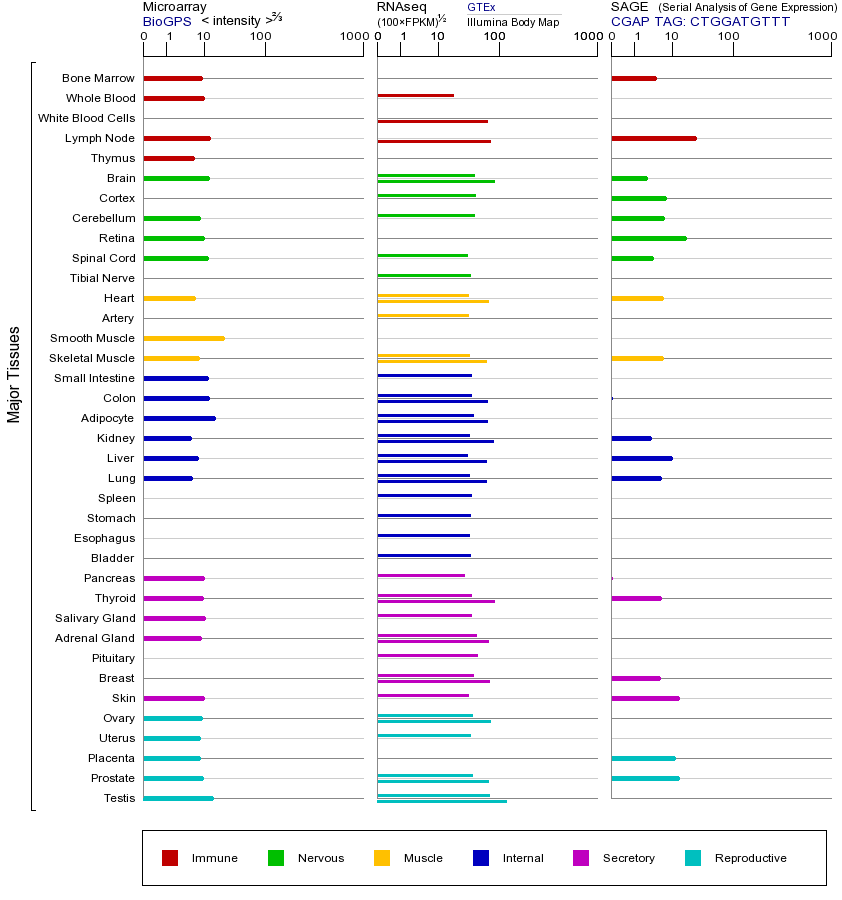
Tissue expression of TAF9:    [UniProt]

Gene expression across tissues
Forward Primer
Forward Tm
Reverse Primer
Reverse Tm
Score
TCGAGAAGTCTGATCATCGG
59
CATCATCTGTGCATCTTTCGG
60
TCGAGAAGTCTGATCATCGG
59
CATCATCTGTGCATCTTTCGG
60
CTGAATCTGGTACACCAGGG
60
CATCTGTGCATCTTTCGGC
60
CATCGAAAGCCAGGTACAC
59
ATCATCTGTGCATCTTTCGG
59
ATACTCAGGGTACACCAGG
58
ATCATCTGTGCATCTTTCGG
59
TCGAGAAGTCTGATCATCGG
59
CATCATCTGTGCATCTTTCGG
60
TCGAGAAGTCTGATCATCGG
59
CATCATCTGTGCATCTTTCGG
60
AAATAGGCCAGGTACACCAG
60
CATCTGTGCATCTTTCGGC
60
CTCGAGAAGTCTGATCATCG
58
TCATCTGTGCATCTTTCGG
58
TGAATCTGGTACACCAGGG
59
TCATCTGTGCATCTTTCGG
58

Subcellular localization of TAF9 (and its protein):

[UniProt]     [GenomeNet]

" d="M482.414,245.296c3.539,4.293,4.455,10.009,0.202,11 c-4.244,0.996-4.983-10.983-8.293-8.438c-5.271,4.08,9.834,12.271,5.144,17.287c-3.717,3.607-6.172-5.75-10.839-1.976 c-4.673,3.776,6.781,7.299,2.831,11.326c-4.354,4.045-6.979-1.449-9.837-5.517c-1.193-1.742-2.059-3.851-3.595-2.748 c-1.516,1.078-1.854,1.795-0.938,3.666c2.374,4.854,9.235,10.119,5.156,12.535c-5.636,3.346-5.044-8.871-9.426-7.574 c-4.388,1.291,2.557,10.66-1.245,11.141c-4.089,0.545-3.483-10.239-6.979-8.575c-2.522,1.206-0.929,3.071-0.938,4.899 c0.004,1.32-0.964,3.6-2.372,4.062c-3.593,1.171-8.544-1.065-10.251-3.59c-6.04-8.93,0.396-15.997,4.639-7.015 c3.023,4.642,5.182,0.834,2.839-2.219c-1.032-1.354-4.309-5.901-0.781-7.252c2.904-1.113,4.271,1.941,5.985,4.592 c2.61,4.016,5.485,0.117,3.031-3.414c-1.828-2.633-2.74-3.803,3.156-7.42c6.405-4.369,6.52,3.869,10.077,0.646 c2.309-1.832-4.783-5.149,0.06-8.995c2.896-2.293,5.18,6.207,7.961,3.516c3.523-2.737-7.717-7.369,0.117-11.736 C473.413,240.77,480.519,242.891,482.414,245.296z"/> Extracellular space Cytosol Plasma membrane Cytoskeleton Lysosome Endosome Peroxisome ER Golgi Apparatus Nucleus Mitochondrion 0 1 2 3 4 5 Confidence
  • plasma membrane
  • cytoplasm
  • extracellular
  • golgi
  • vesicle
  • cytoskeleton
  • endoplasmic reticulum
  • nucleus
  • endosome
  • lysosome
  • mitochondrion

Gene Ontology (GO) terms for TAF9:

GO ID
Protein
Source DB
GO:0006352
D6RGK3 (UniProtKB)
IEA
GO:0046982
D6RGK3 (UniProtKB)
IEA
GO:0006352
D6RHW1 (UniProtKB)
IEA
GO:0046982
D6RHW1 (UniProtKB)
IEA
GO:0006352
D6RIE8 (UniProtKB)
IEA
GO:0046982
D6RIE8 (UniProtKB)
IEA
GO:0006352
D6RIV9 (UniProtKB)
IEA
GO:0046982
D6RIV9 (UniProtKB)
IEA
GO:0006352
D6RIY1 (UniProtKB)
IEA
GO:0046982
D6RIY1 (UniProtKB)
IEA
GO:0000125
Q16594 (UniProtKB)
IDA
GO:0000492
Q16594 (UniProtKB)
IDA
GO:0002039
Q16594 (UniProtKB)
IPI
GO:0003677
Q16594 (UniProtKB)
IDA
GO:0003713
Q16594 (UniProtKB)
IMP
GO:0003713
Q16594 (UniProtKB)
IDA
GO:0005515
Q16594 (UniProtKB)
IPI
GO:0005515
Q16594 (UniProtKB)
IPI
GO:0005515
Q16594 (UniProtKB)
IPI
GO:0005515
Q16594 (UniProtKB)
IPI
GO:0005515
Q16594 (UniProtKB)
IPI
GO:0005515
Q16594 (UniProtKB)
IPI
GO:0005515
Q16594 (UniProtKB)
IPI
GO:0005515
Q16594 (UniProtKB)
IPI
GO:0005515
Q16594 (UniProtKB)
IPI
GO:0005515
Q16594 (UniProtKB)
IPI
GO:0005515
Q16594 (UniProtKB)
IPI
GO:0005515
Q16594 (UniProtKB)
IPI
GO:0005515
Q16594 (UniProtKB)
IPI
GO:0005515
Q16594 (UniProtKB)
IPI
GO:0005515
Q16594 (UniProtKB)
IPI
GO:0005515
Q16594 (UniProtKB)
IPI
GO:0005515
Q16594 (UniProtKB)
IPI
GO:0005515
Q16594 (UniProtKB)
IPI
GO:0005515
Q16594 (UniProtKB)
IPI
GO:0005654
Q16594 (UniProtKB)
TAS
GO:0005654
Q16594 (UniProtKB)
TAS
GO:0005654
Q16594 (UniProtKB)
TAS
GO:0005654
Q16594 (UniProtKB)
TAS
GO:0005654
Q16594 (UniProtKB)
TAS
GO:0005654
Q16594 (UniProtKB)
TAS
GO:0005654
Q16594 (UniProtKB)
TAS
GO:0005654
Q16594 (UniProtKB)
TAS
GO:0005654
Q16594 (UniProtKB)
TAS
GO:0005654
Q16594 (UniProtKB)
TAS
GO:0005654
Q16594 (UniProtKB)
TAS
GO:0005654
Q16594 (UniProtKB)
TAS
GO:0005654
Q16594 (UniProtKB)
TAS
GO:0005654
Q16594 (UniProtKB)
TAS
GO:0005654
Q16594 (UniProtKB)
TAS
GO:0005654
Q16594 (UniProtKB)
TAS
GO:0005654
Q16594 (UniProtKB)
TAS
GO:0005654
Q16594 (UniProtKB)
TAS
GO:0005654
Q16594 (UniProtKB)
TAS
GO:0005654
Q16594 (UniProtKB)
TAS
GO:0005654
Q16594 (UniProtKB)
TAS
GO:0005654
Q16594 (UniProtKB)
TAS
GO:0005654
Q16594 (UniProtKB)
TAS
GO:0005654
Q16594 (UniProtKB)
TAS
GO:0005669
Q16594 (UniProtKB)
IDA
GO:0005669
Q16594 (UniProtKB)
IDA
GO:0006366
Q16594 (UniProtKB)
TAS
GO:0006367
Q16594 (UniProtKB)
TAS
GO:0006367
Q16594 (UniProtKB)
TAS
GO:0006368
Q16594 (UniProtKB)
TAS
GO:0006974
Q16594 (UniProtKB)
IC
GO:0030307
Q16594 (UniProtKB)
IMP
GO:0030914
Q16594 (UniProtKB)
IDA
GO:0032435
Q16594 (UniProtKB)
IDA
GO:0033276
Q16594 (UniProtKB)
IDA
GO:0033613
Q16594 (UniProtKB)
IPI
GO:0033613
Q16594 (UniProtKB)
IPI
GO:0042795
Q16594 (UniProtKB)
TAS
GO:0043066
Q16594 (UniProtKB)
IMP
GO:0043966
Q16594 (UniProtKB)
IDA
GO:0043966
Q16594 (UniProtKB)
IDA
GO:0044212
Q16594 (UniProtKB)
IDA
GO:0045944
Q16594 (UniProtKB)
IDA
GO:0046982
Q16594 (UniProtKB)
IEA
GO:0050821
Q16594 (UniProtKB)
IDA
GO:0051117
Q16594 (UniProtKB)
IPI
GO:0051117
Q16594 (UniProtKB)
IPI
GO:0060760
Q16594 (UniProtKB)
IMP
GO:0070555
Q16594 (UniProtKB)
IMP
GO:0070742
Q16594 (UniProtKB)
IPI
GO:0070761
Q16594 (UniProtKB)
IDA
GO:0071339
Q16594 (UniProtKB)
IDA
GO:1901796
Q16594 (UniProtKB)
TAS
GO:1902166
Q16594 (UniProtKB)
IC
GO:0004402
Q16594 (UniProtKB)
IDA
GO:0004402
Q16594 (UniProtKB)
IDA

microRNAs potentially regulating TAF9:     

String
BioGrid
IntAct
mentha
MINT
Reactome
Loading…
Interacting Gene Interaction Source/Score
Disease Score NofPmids NofSnps Source
HIV Infections 0.12 1 0 CTD_human
IGA Glomerulonephritis 0.12 1 0 CTD_human
Malignant neoplasm of breast 0.000271442 1 0 BeFree
Adenocarcinoma of lung (disorder) 0.000271442 1 0 BeFree
Liver carcinoma 0.000271442 1 0 BeFree
Breast Carcinoma 0.000271442 1 0 BeFree
Pressure cycling technology-assisted data-independent acquisition proteomics reveals molecular alterations and potential therapeutic targets in minor glomerular abnormalities.
Li L, Ling Y, Cai F, Zhong Y, Yang H, Liu F, Li G, Xie X, Singla RK, Ma D, Zhang Y Precis Clin Med IF: 6.4 2026-03-00
LncRNA938/ TAF9/TTK axis promotes EMT and serves as a therapeutic target in hepatoblastoma.
Jin C, Dong B, Xie Y, Chen X, Wu S, Du F, Dong Q, Zhu C J Transl Med IF: 3.786 2025-08-21
A Genome-Wide Association Study in Psoriasis Patients Reveals Variants Associated with Response to Treatment with Interleukin-17A Pathway Inhibitors.
Ioakeimidou D, Zafiriou E, Giannoulis T, Kouvarou O, Gerogianni K, Bogdanos DP, Sarafidou T, Liadaki K Genes (Basel) IF: 3.600 2025-10-13
p53 modulates the activity of the GLI1 oncogene through interactions with the shared coactivator TAF9.
Yoon Joon Won, Lamm Marilyn, Iannaccone Stephen, Higashiyama Nicole, Leong King Fu, Iannaccone Philip, Walterhouse David DNA Repair (Amst) IF: 3.2 2016-02-16
Nonallele specific silencing of ataxin-7 improves disease phenotypes in a mouse model of SCA7.
Ramachandran Pavitra S, Boudreau Ryan L, Schaefer Kellie A, La Spada Albert R, Davidson Beverly L Mol Ther IF: 11.4 2015-07-06
SGF29 and Sry pathway in hepatocarcinogenesis.
Kurabe Nobuya, Murakami Shigekazu, Tashiro Fumio World J Biol Chem 2015-08-31
A network-based approach to identify disease-associated gene modules through integrating DNA methylation and gene expression.
Zhang Yuanyuan, Zhang Junying, Liu Zhaowen, Liu Yajun, Tuo Shouheng Biochem Biophys Res Commun IF: 2.5 2015-11-27
E(y)1/TAF9 mediates the transcriptional output of Notch signaling in Drosophila.
Xie Gengqiang, Yu Zhongsheng, Jia Dongyu, Jiao Renjie, Deng Wu-Min J Cell Sci IF: 3.9 2015-08-10
Targeting Gli transcription activation by small molecule suppresses tumor growth.
Bosco-Clément G, Zhang F, Chen Z, Zhou H-M, Li H, Mikami I, Hirata T, Yagui-Beltran A, Lui N, Do H T, Cheng T, Tseng H-H, Choi H, Fang L-T, Kim I-J, Yue D, Wang C, Zheng Q, Fujii N, Mann M, Jablons D M, He B Oncogene IF: 9.1 2014-06-23

Loading comments...

Log in to post comments Log In Sign Up

Contact

No. 2 Wenbo Road, Zhangqiu District, Jinan, Shandong

Qilu Normal University · Genelibs Bioinformatics Lab

750 Shunhua Rd, Jinan

2F, Bldg F, University Science Park

Tel: 0531-88819269

WeChat Official Account

Follow our WeChat subscription account for real-time updates and the latest in medical and biological research.


Business Email

E-mail: product@genelibs.com

