
APC (APC regulator of WNT signaling pathway)

The APC (Adenomatous Polyposis Coli) gene encodes a large, evolutionarily conserved tumor suppressor protein that serves as a central regulator of the canonical Wnt signaling pathway, playing a pivotal role in controlling cell proliferation, differentiation, and migration. Functionally, the APC protein acts as a critical component of the destruction complex, where it binds to β-catenin to facilitate its ubiquitination and subsequent proteasomal degradation, thereby preventing the aberrant accumulation of β-catenin and the consequent overactivation of Wnt target genes that drive uncontrolled cell growth. Beyond its canonical role in Wnt signaling, APC is integral to cytoskeletal organization, interacting with microtubule-associated proteins to maintain cell polarity, ensure chromosomal stability, and regulate mitotic fidelity and cell migration. Mutations in APC are the primary driver of familial adenomatous polyposis (FAP), an autosomal dominant disorder characterized by the development of hundreds to thousands of intestinal polyps that carry a near-certain risk of progressing to colorectal cancer; furthermore, somatic APC mutations are frequently observed in sporadic colorectal carcinomas, where their loss leads to sustained Wnt pathway activation and tumorigenesis. The gene’s function is further modulated by alternative splicing variants that produce distinct isoforms with tissue-specific roles, adding layers of complexity to its regulatory network. While APC loss is predominantly associated with colorectal malignancies, its inactivation has also been implicated in other neoplasms, including medulloblastoma and thyroid cancer. Conversely, dysregulated expression of APC, whether through overexpression that disrupts normal embryonic development and tissue homeostasis or through downregulation that promotes oncogenic signaling, underscores the delicate balance required for proper cellular function and highlights APC’s broad significance in both developmental biology and cancer pathogenesis.
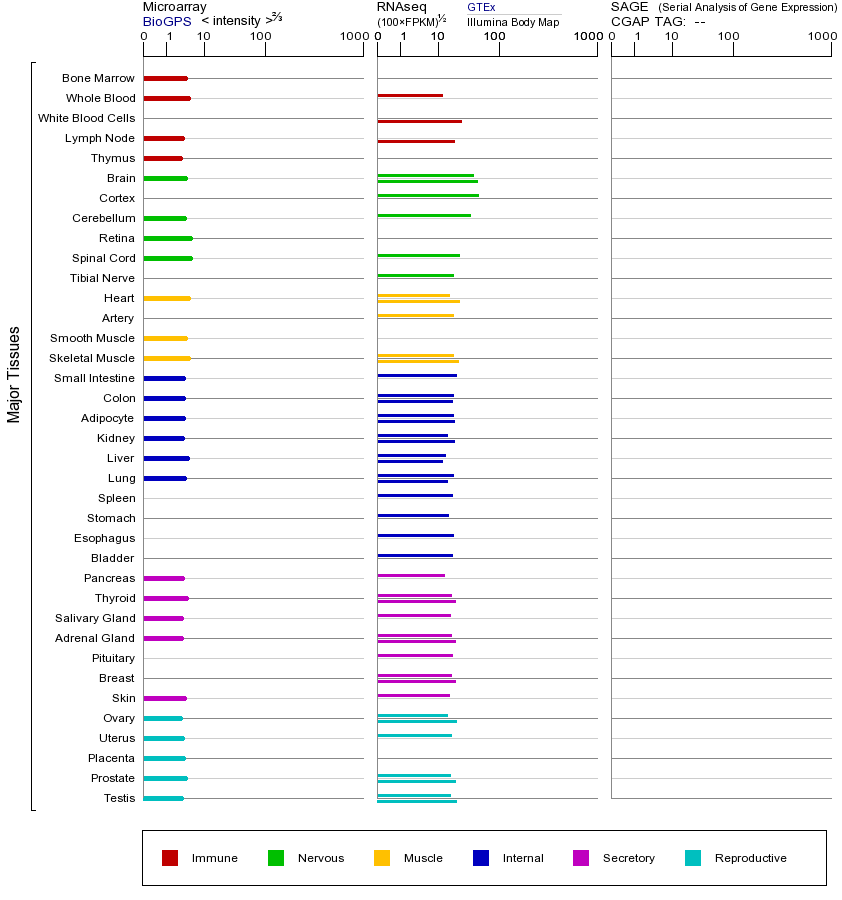
Gene Ontology
Subcellular localization of APC (and its protein):
- plasma membrane
- cytoplasm
- extracellular
- golgi
- vesicle
- cytoskeleton
- endoplasmic reticulum
- nucleus
- endosome
- lysosome
- mitochondrion
Gene Ontology (GO) terms for APC:
| Interacting Gene | Interaction | Source/Score |
| Name |
|---|
| 4310 Wnt signaling pathway [PATH:hsa04310] |
| 4390 Hippo signaling pathway [PATH:hsa04390] |
| 4810 Regulation of actin cytoskeleton [PATH:hsa04810] |
| 4550 Signaling pathways regulating pluripotency of stem cells [PATH:hsa04550] |
| 5200 Pathways in cancer [PATH:hsa05200] |
| 5206 MicroRNAs in cancer [PATH:hsa05206] |
| 5210 Colorectal cancer [PATH:hsa05210] |
| 5217 Basal cell carcinoma [PATH:hsa05217] |
| 5213 Endometrial cancer [PATH:hsa05213] |
| 5166 HTLV-I infection [PATH:hsa05166] |
| Name |
|---|
| AMER1 mutants destabilize the destruction complex |
| APC truncation mutants are not K63 polyubiquitinated |
| APC truncation mutants have impaired AXIN binding |
| Apoptosis |
| Apoptotic cleavage of cellular proteins |
| Apoptotic execution phase |
| AXIN missense mutants destabilize the destruction complex |
| AXIN mutants destabilize the destruction complex, activating WNT signaling |
| Beta-catenin phosphorylation cascade |
| deactivation of the beta-catenin transactivating complex |
| Degradation of beta-catenin by the destruction complex |
| disassembly of the destruction complex and recruitment of AXIN to the membrane |
| Disease |
| Diseases of signal transduction |
| misspliced GSK3beta mutants stabilize beta-catenin |
| phosphorylation site mutants of CTNNB1 are not targeted to the proteasome by the destruction complex |
| Programmed Cell Death |
| S33 mutants of beta-catenin aren't phosphorylated |
| S37 mutants of beta-catenin aren't phosphorylated |
| S45 mutants of beta-catenin aren't phosphorylated |
| Signal Transduction |
| Signaling by Wnt |
| Signaling by WNT in cancer |
| T41 mutants of beta-catenin aren't phosphorylated |
| TCF dependent signaling in response to WNT |
| truncated APC mutants destabilize the destruction complex |
| truncations of AMER1 destabilize the destruction complex |
| Disease | Score | NofPmids | NofSnps | Source |
| Adenomatous Polyposis Coli | 0.776808767 | 654 | 12 | BeFree_CLINVAR_CTD_human_GAD_LHGDN_MGD_ORPHANET_UNIPROT |
| Desmoid disease, hereditary | 0.361085767 | 4 | 0 | BeFree_CLINVAR_CTD_human_ORPHANET |
| Liver carcinoma | 0.328067311 | 21 | 1 | BeFree_CLINVAR_CTD_human_GAD_MGD |
| Gardner Syndrome | 0.244810009 | 9 | 10 | BeFree_CLINVAR_GAD_ORPHANET |
| Medulloblastoma | 0.24434307 | 18 | 0 | BeFree_CTD_human_UNIPROT |
| Stomach Neoplasms | 0.240814326 | 3 | 2 | BeFree_CLINVAR_CTD_human |
| Colorectal Neoplasms | 0.240791019 | 114 | 2 | BeFree_CTD_human_GAD_LHGDN |
| Colorectal Cancer | 0.24 | 321 | 5 | BeFree_GAD_MGD |
| Colonic Neoplasms | 0.231776019 | 46 | 1 | BeFree_CTD_human_GAD_LHGDN_RGD |
| Adenoma | 0.190731622 | 149 | 4 | BeFree_CTD_human_GAD_LHGDN |

Contact
No. 2 Wenbo Road, Zhangqiu District, Jinan, Shandong
Qilu Normal University · Genelibs Bioinformatics Lab
750 Shunhua Rd, Jinan
2F, Bldg F, University Science Park
Tel: 0531-88819269
WeChat Official Account
Follow our WeChat subscription account for real-time updates and the latest in medical and biological research.
Business Email
E-mail: product@genelibs.com

Copyright © 2026.Genelibs Jinan Honghui Biotechnology Co., Ltd. 鲁ICP备20007159号-2
