
APPL2 (adaptor protein, phosphotyrosine interacting with PH domain and leucine zipper 2)

symbol
APPL2
locus group
protein-coding gene
location
12q23.3
gene_family
Pleckstrin homology domain containing
alias symbol
FLJ10659|DIP13B
alias name
DCC-interacting protein 13-beta
entrez id
55198
ensembl gene id
ENSG00000136044
ucsc gene id
uc001tlf.2
refseq accession
NM_018171
hgnc_id
HGNC:18242
approved reserved
2007-01-26
12q23.3
ChineseEnglish

APPL2 (Adaptor Protein, Phosphotyrosine Interaction, PH Domain and Leucine Zipper Containing 2) is a multifunctional scaffolding protein belonging to the APPL family, which also includes APPL1, characterized by the conserved presence of pleckstrin homology (PH), phosphotyrosine-binding (PTB), and leucine zipper domains that facilitate its integration into diverse cellular signaling networks. By interacting with cell surface receptors and intracellular signaling molecules, APPL2 plays a pivotal role in regulating cell proliferation, migration, endocytosis, and metabolism, with particularly high expression levels observed in the brain, heart, and skeletal muscle. A central function of APPL2 lies in its modulation of the insulin signaling pathway, where it physically associates with key kinases such as AKT and AMPK to coordinate glucose homeostasis and energy balance; consequently, loss-of-function mutations or aberrant expression can impair insulin signal transduction, leading to insulin resistance and type 2 diabetes, whereas enhanced expression may improve insulin sensitivity. Beyond metabolic regulation, APPL2 is implicated in autophagy, influencing cell survival and apoptosis, and it intersects with oncogenic pathways such as PI3K/AKT and MAPK, where its dysregulation can paradoxically promote tumor growth and metastasis. In the nervous system, APPL2 contributes to neuronal survival and synaptic plasticity, linking its dysfunction to neurodegenerative conditions like Alzheimer’s disease, while in the cardiovascular system, its expression levels impact angiogenesis and cardiac function. Although functionally overlapping with APPL1, APPL2 exhibits distinct roles, particularly in lipid metabolism and inflammatory responses, underscoring its critical position as a versatile signal transducer whose dysregulation has broad implications for metabolic, neurological, and cardiovascular health.
Nucleotide sequence of APPL2:[NCBI]
Loading Gene Browser...
Protein Sequence
1MPAVDKLLLE EALQDSPQTR SLLSVFEEDA GTLTDYTNQL
41LQAMQRVYGA QNEMCLATQQ LSKQLLAYEK QNFALGKGDE
81 EVISTLHYF SKVVDELNLL HTELAKQLAD TMVLPIIQFR
121EKDLTEVSTL KDLFGLASNE HDLSMAKYSR LPKKKENEKV
161K TEVGKEVA AARRKQHLSS LQYYCALNAL QYRKQMAMME
201PMIGFAHGQI NFFKKGAEMF SKRMDSFLSS VADMVQSIQV
241EL EAEAEKM RVSQQELLSV DESVYTPDSD VAAPQINRNL
281IQKAGYLNLR NKTGLVTTTW ERLYFFTQGG NLMCQPRGAV
321AGG LIQDLD NCSVMAVDCE DRRYCFQITT PNGKSGIILQ
361AESRKENEEW ICAINNISRQ IYLTDNPEAV AIKLNQTALQ
401AVTP ITSFG KKQESSCPSQ NLKNSEMENE NDKIVPKATA
441SLPEAEELIA PGTPIQFDIV LPATEFLDQN RGSRRTNPFG
481ETEDE SFPE AEDSLLQQMF IVRFLGSMAV KTDSTTEVIY
521EAMRQVLAAR AIHNIFRMTE SHLMVTSQSL RLIDPQTQVS
561RANFEL TSV TQFAAHQENK RLVGFVIRVP ESTGEESLST
601YIFESNSEGE KICYAINLGK EIIEVQKDPE ALAQLMLSIP
641LTNDGKY VL LNDQPDDDDG NPNEHRGAES EA
Structure predicted by AlphaFold DB(UniProt: Q8NEU8). Color indicates pLDDT confidence (dark blue = high, yellow/orange = low).
SNP variants of APPL2:           Showing partial SNPs
rs8015       rs9143       rs10071       rs703683       rs727888       rs750060       rs752471       rs873119       rs879129       rs880797       rs881279       rs935240       rs935241       rs935242       rs935244       rs935245       rs935248      

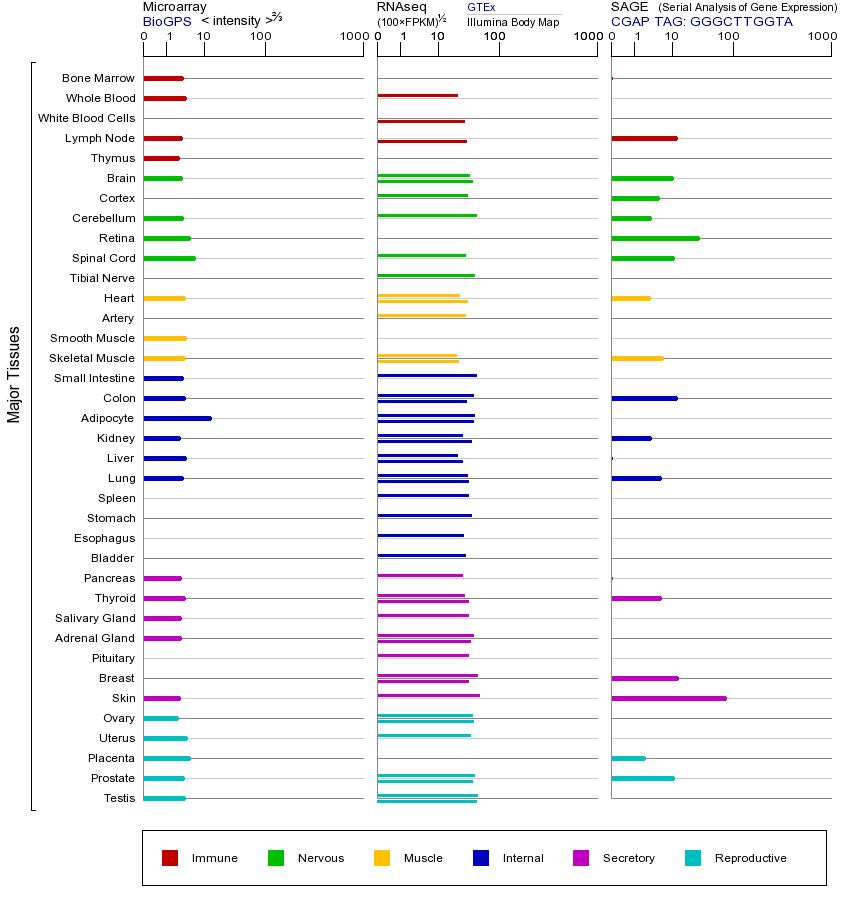
Tissue expression of APPL2:    [UniProt]

Gene expression across tissues
Forward Primer
Forward Tm
Reverse Primer
Reverse Tm
Score
TTGTTCAACTCTGGCTATTCC
58
AAAGAGAATCTTCTGCTTCTGG
59
ATTCTCTTGTCCTACTCGCTC
59
AGCAGCTGGTTGGTATAGTC
60
GGATCTCACAGAAGTAAGCAC
59
GTCTTCACCTTCTCATTCTCC
58
GACTCGCTCTTTACTGAGC
58
CACATCTCATTCTGGGCTC
58
GACTCGCTCTTTACTGAGC
58
CACATCTCATTCTGGGCTC
58
GTTCTACCTATCATACAATTCCGAG
59
GGTCATGCTCATTGCTAGC
59
TTCAGTACTACTGTGCCCTC
59
AAAGTTAATCTGTCCATGGGC
59
TGAAAGCAACTCAGAAGGC
58
TTCTGGATCCTTCTGAACCTC
59
ATCTATTTGGACTCGCTAGC
57
GGTCTTCACCTTCTCATTCTC
58
GAGCCCAGAATGAGATGTG
58
TTCTTCATCACCTTTGCCA
57

Subcellular localization of APPL2 (and its protein):

[UniProt]     [GenomeNet]

" d="M482.414,245.296c3.539,4.293,4.455,10.009,0.202,11 c-4.244,0.996-4.983-10.983-8.293-8.438c-5.271,4.08,9.834,12.271,5.144,17.287c-3.717,3.607-6.172-5.75-10.839-1.976 c-4.673,3.776,6.781,7.299,2.831,11.326c-4.354,4.045-6.979-1.449-9.837-5.517c-1.193-1.742-2.059-3.851-3.595-2.748 c-1.516,1.078-1.854,1.795-0.938,3.666c2.374,4.854,9.235,10.119,5.156,12.535c-5.636,3.346-5.044-8.871-9.426-7.574 c-4.388,1.291,2.557,10.66-1.245,11.141c-4.089,0.545-3.483-10.239-6.979-8.575c-2.522,1.206-0.929,3.071-0.938,4.899 c0.004,1.32-0.964,3.6-2.372,4.062c-3.593,1.171-8.544-1.065-10.251-3.59c-6.04-8.93,0.396-15.997,4.639-7.015 c3.023,4.642,5.182,0.834,2.839-2.219c-1.032-1.354-4.309-5.901-0.781-7.252c2.904-1.113,4.271,1.941,5.985,4.592 c2.61,4.016,5.485,0.117,3.031-3.414c-1.828-2.633-2.74-3.803,3.156-7.42c6.405-4.369,6.52,3.869,10.077,0.646 c2.309-1.832-4.783-5.149,0.06-8.995c2.896-2.293,5.18,6.207,7.961,3.516c3.523-2.737-7.717-7.369,0.117-11.736 C473.413,240.77,480.519,242.891,482.414,245.296z"/> Extracellular space Cytosol Plasma membrane Cytoskeleton Lysosome Endosome Peroxisome ER Golgi Apparatus Nucleus Mitochondrion 0 1 2 3 4 5 Confidence
  • plasma membrane
  • cytoplasm
  • extracellular
  • golgi
  • vesicle
  • cytoskeleton
  • endoplasmic reticulum
  • nucleus
  • endosome
  • lysosome
  • mitochondrion

Gene Ontology (GO) terms for APPL2:

GO ID
Protein
Source DB
GO:0005515
Q8NEU8 (UniProtKB)
IPI
GO:0005515
Q8NEU8 (UniProtKB)
IPI
GO:0005515
Q8NEU8 (UniProtKB)
IPI
GO:0005515
Q8NEU8 (UniProtKB)
IPI
GO:0005515
Q8NEU8 (UniProtKB)
IPI
GO:0005515
Q8NEU8 (UniProtKB)
IPI
GO:0005515
Q8NEU8 (UniProtKB)
IPI
GO:0005515
Q8NEU8 (UniProtKB)
IPI
GO:0005515
Q8NEU8 (UniProtKB)
IPI
GO:0005515
Q8NEU8 (UniProtKB)
IPI
GO:0005515
Q8NEU8 (UniProtKB)
IPI
GO:0005515
Q8NEU8 (UniProtKB)
IPI
GO:0005515
Q8NEU8 (UniProtKB)
IPI
GO:0005515
Q8NEU8 (UniProtKB)
IPI
GO:0005634
Q8NEU8 (UniProtKB)
IDA
GO:0005737
Q8NEU8 (UniProtKB)
IC
GO:0007049
Q8NEU8 (UniProtKB)
IEA
GO:0007165
Q8NEU8 (UniProtKB)
TAS
GO:0008283
Q8NEU8 (UniProtKB)
IDA
GO:0010008
Q8NEU8 (UniProtKB)
IDA
GO:0031901
Q8NEU8 (UniProtKB)
IEA
GO:0070062
Q8NEU8 (UniProtKB)
IDA
GO:0016581
Q8NEU8 (UniProtKB)
IDA

microRNAs potentially regulating APPL2:     

String
BioGrid
IntAct
mentha
MINT
Loading…
Interacting Gene Interaction Source/Score
Disease Score NofPmids NofSnps Source
IGA Glomerulonephritis 0.12 1 0 CTD_human
Prostatic Neoplasms 0.12 1 0 CTD_human
Substance-Related Disorders 0.12 1 0 CTD_human
Glioblastoma Multiforme 0.000271442 1 0 BeFree
Fatty Liver 0.000271442 1 0 BeFree
aggressive cancer 0.000271442 1 0 BeFree
Glioma 0.000271442 1 0 BeFree
Glioblastoma 0.000271442 1 0 BeFree
Steatohepatitis 0.000271442 1 0 BeFree
Non-alcoholic Fatty Liver Disease 0.000271442 1 0 BeFree
Aspongopus chinensis ach-miR-276a-3p induces breast cancer cell cycle arrest by targeting APPL2 to regulate the CDK2-Rb-E2F1 signaling pathway.
Cai R, Khan S, Chen X, Li H, Tan J, Tian Y, Zhao S, Yin Z, Liu T, Jin D, Guo J Toxicol Appl Pharmacol IF: 3.6 2024-00-00
A genome-wide association study reveals candidate genes and regulatory regions associated with birth weight in pigs.
Deng D, Wang H, Han K, Tang Z, Li X, Liu X, Liu X, Li X, Yu M Anim Genet IF: 2.2 2024-10-00
Lack of T04C9.1, the Homologue of Mammalian APPL2, Leads to Premature Ageing and Shortens Lifespan in Caenorhabditis elegans.
Li Z, Chen Z, Zhao L, Sun J, Yin L, Jiang Y, Shi X, Song Z, Zhang L Genes (Basel) IF: 3.600 2024-05-22
RNA-sequencing attest increased sperm motility in bovine spermatozoa treated with ethanolic extract of Putranjiva roxburghii.
Italiya JM, Patel MR, Golaviya AV, Patel SS, Thakkar BK, Jakhesara SJ, Joshi CG, Koringa PG 3 Biotech IF: 3.1 2023-01-00
Long Noncoding RNA HAFML Promotes Migration and Invasion of Rheumatoid Fibroblast-like Synoviocytes.
Xu S, Liu D, Kuang Y, Li R, Wang J, Shi M, Zou Y, Qiu Q, Liang L, Xiao Y, Xu H J Immunol IF: 4.0 2023-00-15
OCC-1D regulates Wnt signaling pathway: potential role of long noncoding RNA in colorectal cancer.
Yousefi F, Najafi H, Behmanesh M, Soltani BM Mol Biol Rep IF: 3.2 2022-05-00
Assembly of a pangenome for global cattle reveals missing sequences and novel structural variations, providing new insights into their diversity and evolutionary history.
Zhou Y, Yang L, Han X, Han J, Hu Y, Li F, Xia H, Peng L, Boschiero C, Rosen BD, Bickhart DM, Zhang S, Guo A, Van Tassell CP, Smith TPL, Yang L, Liu GE Genome Res IF: 6.3 2022-08-25
Adiponectin Alleviates Diet-Induced Inflammation in the Liver by Suppressing MCP-1 Expression and Macrophage Infiltration.
Ryu J, Hadley JT, Li Z, Dong F, Xu H, Xin X, Zhang Y, Chen C, Li S, Guo X, Zhao JL, Leach RJ, Abdul-Ghani MA, DeFronzo RA, Kamat A, Liu F, Dong LQ Diabetes IF: 9.3 2021-00-00
Metagenome-genome-wide association studies reveal human genetic impact on the oral microbiome.
Liu X, Tong X, Zhu J, Tian L, Jie Z, Zou Y, Lin X, Liang H, Li W, Ju Y, Qin Y, Zou L, Lu H, Zhu S, Jin X, Xu X, Yang H, Wang J, Zong Y, Liu W, Hou Y, Jia H, Zhang T Cell Discov 2021-12-07

Loading comments...

Log in to post comments Log In Sign Up

Contact

No. 2 Wenbo Road, Zhangqiu District, Jinan, Shandong

Qilu Normal University · Genelibs Bioinformatics Lab

750 Shunhua Rd, Jinan

2F, Bldg F, University Science Park

Tel: 0531-88819269

WeChat Official Account

Follow our WeChat subscription account for real-time updates and the latest in medical and biological research.


Business Email

E-mail: product@genelibs.com

